|
|
||
|
|
|
|
|
|
||
|
|
|
|
|
|
||
|
|
|
|
|
|||
|
|
||
|
|||
|
|
||
Eoconus brevis (J. de C. Sowerby, 1840)
Eoconus catenulatus (J. de C. Sowerby, 1840)
Eoconus militaris (J. de C. Sowerby, 1840)
Eoconus blagravei (Vredenburg, 1925)
Descrizione
e caratteristiche:
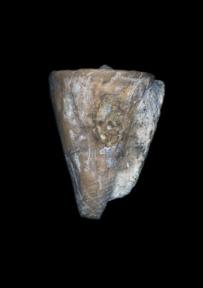
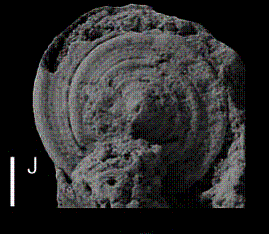
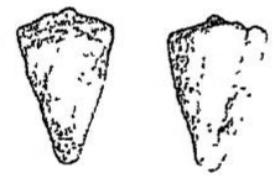
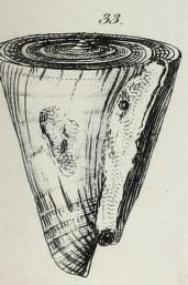
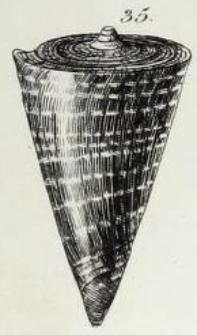
Conus brevis: Short-conical; spire flat, with a produced apex marked with 4 concentric striae decussated by the lines of growth; base ornamented with several small, rather distant ridges (1). E’ una conchiglia corta e a; la spira è piatta, con apice prodotto, segnato con 4 strie concentriche decussate dalle linee di crescita; base ornata da numerose piccole creste piuttosto distanti.
Distribution (5): Miocene of Kachchh, Quilon, India and Sri Lanka.
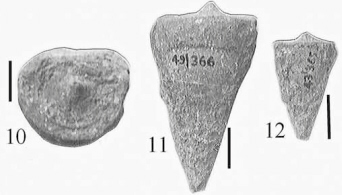
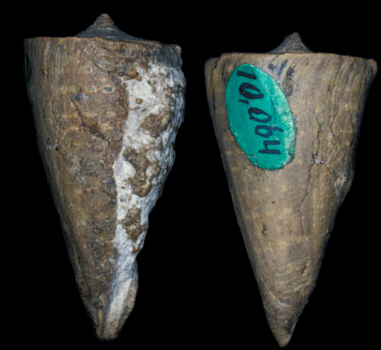
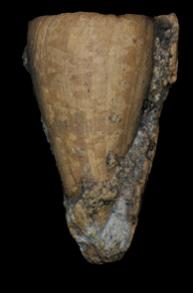
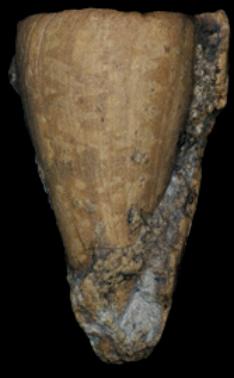
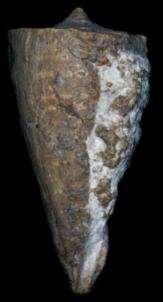
Remarks (5): The Ranjitpur specimens recorded here approach Sowerby’s type of Conus militaris in dimensional ratios, but that specimen bears spiral ornamentation over the entire last whorl. In dimensional ratios
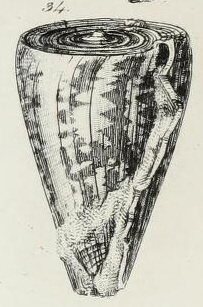
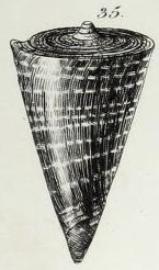
and all other respects these examples are quite comparable to Sowerby’s (1840, pl. XXVI, figs. 33, 35) specimens illustrated as Conus brevis and Conus catenatulus respectively. Vredenburg (1925) has discussed this species and its variations at length. All the examples reported here fall within this variability. Therefore, these are referred to Conus brevis.
Conus militaris: Conical, elongated, slightly contracted towards the edge of the spire, coloured by many triangular spots arranged in zigzag rows; spire flat, upper surfaces of the volutions concave; base nearly smooth(1). La conchiglia è conica, allungata, leggermente contratta verso il bordo della spira, colorata da tante macchie triangolari disposte in file a zig zag; spira piatta, superfici superiori delle voluzioni concave; base quasi liscia.
Conus catenulatus: Conical, elongated, coloured with transverse rows of white spots upon a dark ground — spire flat, elevated in the middle, concentrically striated, mottled with white, the edge sharp; the base obscurely furrowed (1). La conchiglia è conica, allungata, colorata con file trasversali di macchie bianche su un fondo scuro; la spira è piatta, rialzata al centro, concentricamente striata, chiazzata di bianco, il bordo affilato; la base oscuramente solcata.
Harzhauser et. al. Riuniscono in un’unica specie il Conus brevis, il Conus catenulatus e il Conus militaris (2, 4), tuttavia mi sembra che forma e colorazione siano sufficientemente diverse da poter giustificare il fatto che siano state definite tre specie differenti.
Vredenburg definì il Conus blagravei (Vredenburg, 1925) come specie dell’Eocene Inferiore, in riferimento alla località di Sind, in India: egli quindi riferì le registrazioni eoceniche del Conus brevis alla specie da lui definita, incerto sul fatto che il nome fosse in sinonimia il Conus brevis. L’epoca geologica indicata è il Cuisiano (2, 4).
|
|
||
|
|
|
|
|
|
||
|
|
|
|
|
|
||
|
|
|
|
|
|||
|
|
||
|
|||
|
|
||
|
|
|
|
|
|
Bibliografia Consultata
(1) - Sowerby (1840) – Transactions of the Geological Society of London, (2) 5 (2)
(3) - Vredenburg (1925) “Memoirs of The Geological Survey of India” Vol. 50
(5) - Jain (2014) "Neogene Fossils From Kathiawar, Gujarat, India With Special Emphasis on Taxonomic Description of Molluscs and Corals" (Courtesy of Kanishka Bose on 20/11/2023)
(7) - Davies, Artriur Morty. “The Faunas of the Miocene of Ceylon” pag. 600