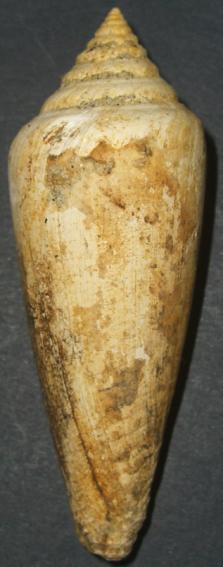
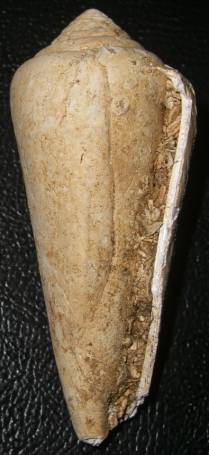
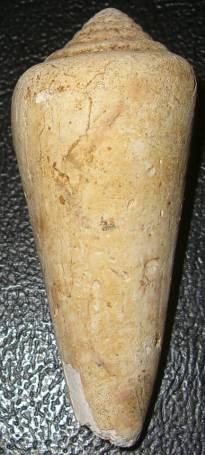
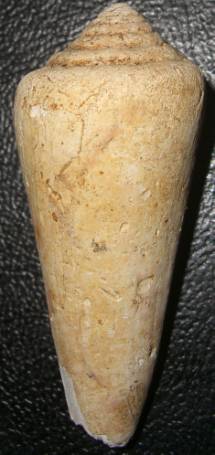
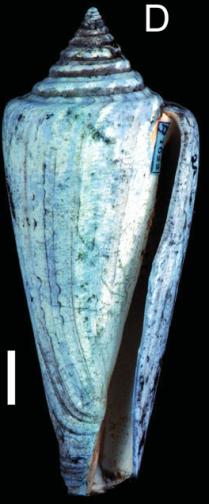
Conus elatus
|
|
|
|
|
|
Conus elatus (Austria) (6)
|
|
Conus (Chelyconus) elatus (Michelotti, 1847)
Conus (Plagioconus) elatus (Michelotti, 1847)
Conus tauroelatus (Sacco, 1893)
Conus (Plagioconus) extensus (Hoernes, 1851)
Conus (Plagioconus) haueri (Hoernes, 1851)
Conus elatus var. haueriana (Sacco, 1893)
Conus (Chelyconus) elatus (Michelotti, 1847)
Descrizione e caratteristiche:
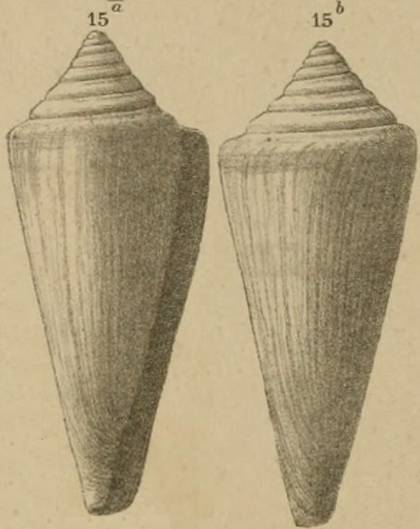
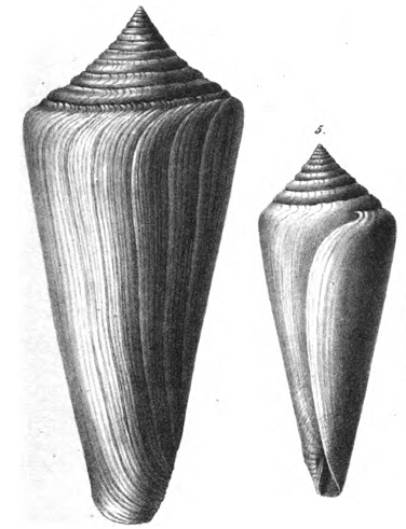
Testa conica, élongata; spirae exertae; anfractubus funiformibus : sutura incavata distinctis; basi acuminata (Borson).
Testa conico-elongata, cijlindrica; spira exerta; anfractibus supernis vix elatis, rotundatis, mediis subanguUitis, postremo ungulato, rugulosis, sulcis longitudinalibus oblique instructis (Michelotti).
|
Altezza [mm.] |
Larghezza [mm.] |
Michelotti (1847) |
30 |
|
Sacco (1893) |
40-150 |
17-55 |
Hall (1964) |
40-150 |
|
|
|
|
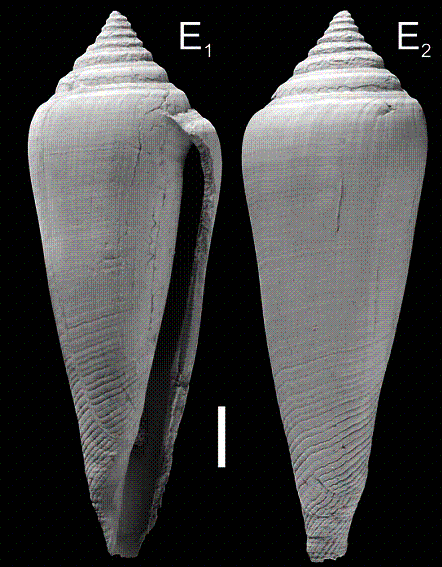
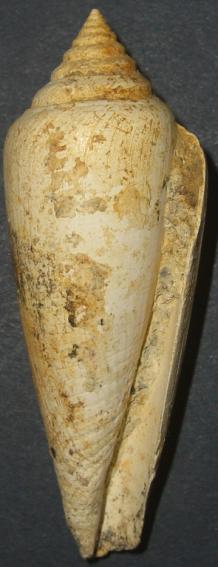
In Piemonte si trova in strati del Tortoniano. La spira è abbastanza bassa, rispetto all’altezza totale della conchiglia, è scalarata ed ha un profilo decisamente concavo. Le spire sono piane e dotate di carena. Anche in questa specie, le prime spire sono tubercolate. Nella parte superiore delle ultime spire è talvolta presente un cordoncino più o meno depresso (Sacco, 1893). Sacco descrisse anche il Conus tauroelatus, una specie dell’Elveziano che sembra appartenere al gruppo del Conus elatus, ma che per alcune caratteristiche egli ritenne di mantenere separata.
This species was frequently treated as Conus elongatus Borson, 1820 (e.g. Hall 1966; Davoli 1972; Bałuk 2006). This name, however, is preoccupied by C. elongatus Holten, 1802 and consequently C. elatus Michelotti, 1847 is the next available name (6).
Remarks (8)
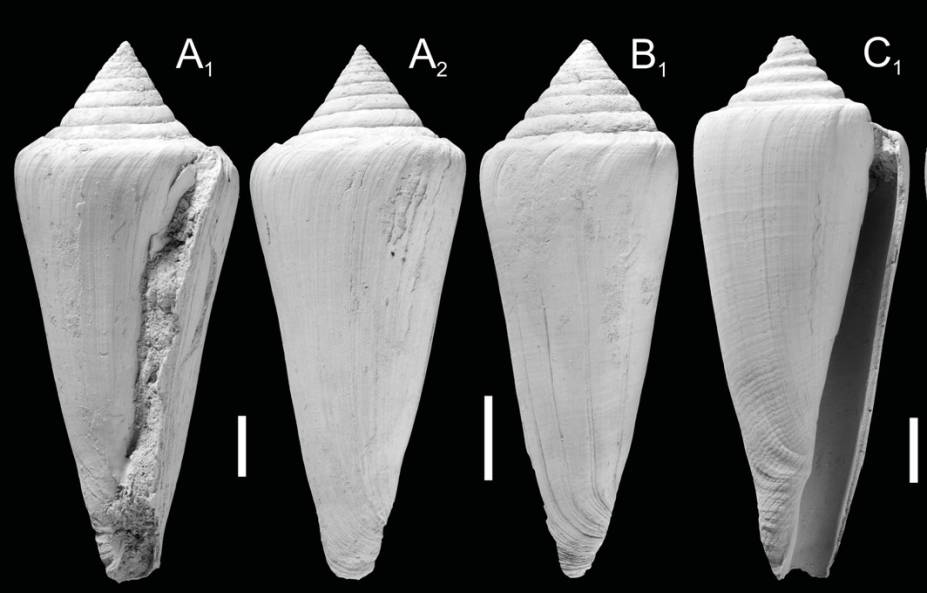
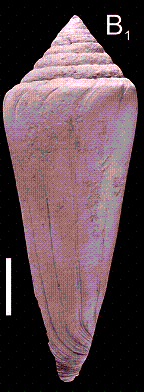
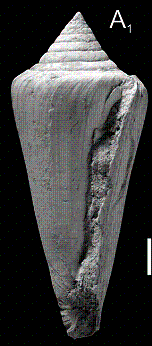
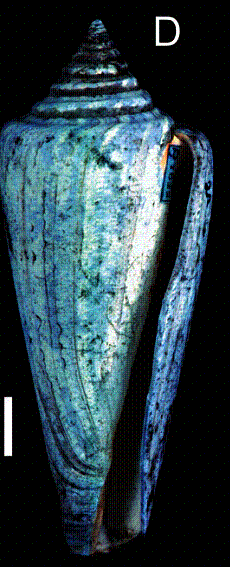
Michelotti (1847) identified two morphotypes of Conus for which he gave two names, elatus and puschi respectively. The two species were differentiated mainly by the presence or absence of a widened last whorl and the angulation at shoulder. This difference was later illustrated in Sacco (1893b) and by Hall (1966). Davoli (1972) figured some extreme morphs of Conus elatus, but he failed to identify Conus puschi, as noted by Harzhauser & Landau (2016). Additionally, morphotypes of the Paratethyan Conus puschi possess shallower subsutural flexures than Conus elatus (Harzhauser & Landau 2016). Taking all this into account, we tried to identify our specimens based on morphology, as the colour patterns are poorly preserved or non-existent. The material mostly comes from one locality (Achladhia) and was previously assigned to Conus puschi (Symeonidis 1965; Symeonidis & Kostantinidis 1968). We identified several large sized specimens with a widened shoulder and angulations at the shoulder (Fig. 29F–G), which can be considered as ‘elatus’ morphs. We also found shells with smooth spire whorls and almost no angulation at the shoulder (Fig. 29A), which can be considered as ‘puschi’ morphs (8).
Distribuzione:
In Italia, in Piemonte e in Emilia nel Tortoniano e nell’Elveziano (1).
In Francia nel periodo Badeniano.
Conus elatus
|
|
|
|
|
|
Conus elatus (Austria) (6)
|
|
|
|
|
|
|
|
Conus tauroelatus (Sacco, 1893)
Osservazioni. — Sembra appartenere al gruppo del L. elatus, ricordandone specialmente la var. perlongespirata ; ma nel complesso pare dover costituire specie a sé.
Conus tauroelatus
|
|
|
Conus (Plagioconus) extensus (Hoernes, 1851)
Le conchiglie di questa specie sono grandi, la spira è corta, da conica a debolmente celoconoide. Le prime spire presentano grossi grani sopra la sutura. La sutura è profondamente impressa. La curva subsuturale è molto profonda, moderatamente curva, fortemente asimmetrica. L’ultimo giro è molto allungato, debolmente ristretta alla base; spalla moderatamente rotonda con la posizione del diametro massimo a breve distanza sotto la spalla. Apertura stretta, che si allarga abapicamente Canale sifonico lungo, debolmente ricurvo; fasciole allungate, leggermente attorcigliate e delimitate dallo stretto labbro interno lucido da una sottile tacca. Base ricoperta da delicatissime scanalature a spirale sulla metà adattabile; le scanalature diventano più forti e larghe abapicamente; di solito un po 'irregolare e snocciolato. Schema di colore alla luce UV costituito da flammule leggere su spirali a guglia e spalla dell'ultima spirale parallela alla flessione subuturale; bande indistinte sull'ultima spirale
Questa specie è caratterizzata dalla rampa suturale concava recante strie spirali, dalla spalla netta ma arrotondata e da una variabilità di contorno piuttosto moderata. La maggiore variabilità è rappresentata dalla scultura a spirale più o meno prominente. Hörnes (1851) aveva a portata di mano un solo esemplare completo, che in seguito è stato in gran parte distrutto; solo la guglia è conservata.
Conus extensus
|
|
|
||
|
||
|
||
|
||
|
||
|
||
|
|
|
|
|
|
|
|
|
|
|
|
|
|
|
|
|
|
Conus (Plagioconus) haueri (Hoernes, 1851)
Descrivendo il Conus haueri, Partsch affermò che esso era così strettamente correlato al Conus elatus da poter considerare identiche le due specie, in quanto gli esemplari più piccoli da lui osservati erano perfettamente aderenti alla descrizione e alle immagini date da Michelotti. In effetti anche Harzhauser & Landau riconoscono che il Conus haueri è una specie problematica(6).
The syntype of Conus haueri from Grinzing mentioned by Hornes (1851, not illustrated) and all other shells identified as C. haueri in the NHMW collection agree fully with Plagioconus elatus (Michelotti, 1847) as understood by Hall (1966). Therefore, we consider Conus haueri Hornes, 1851 a nomen dubium(6).
Conus haueri
|
|
Bibliografia
Consultata