|
|
|
|
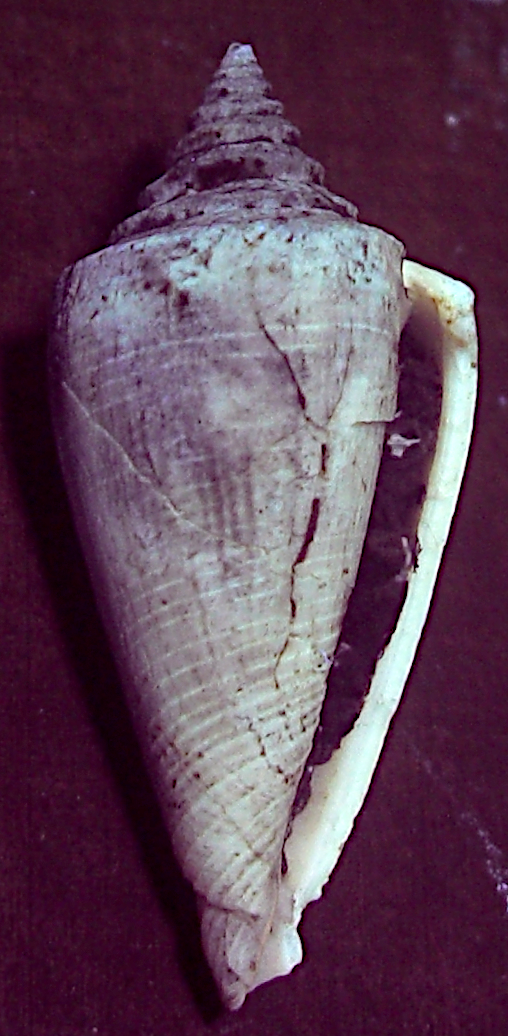
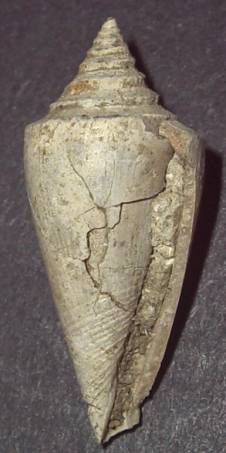
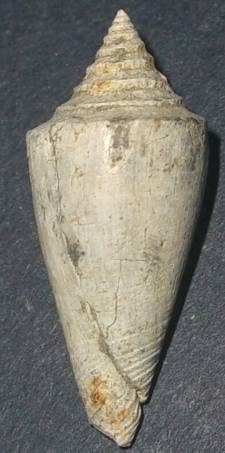
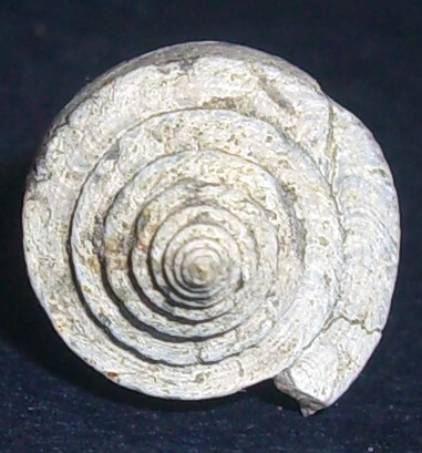
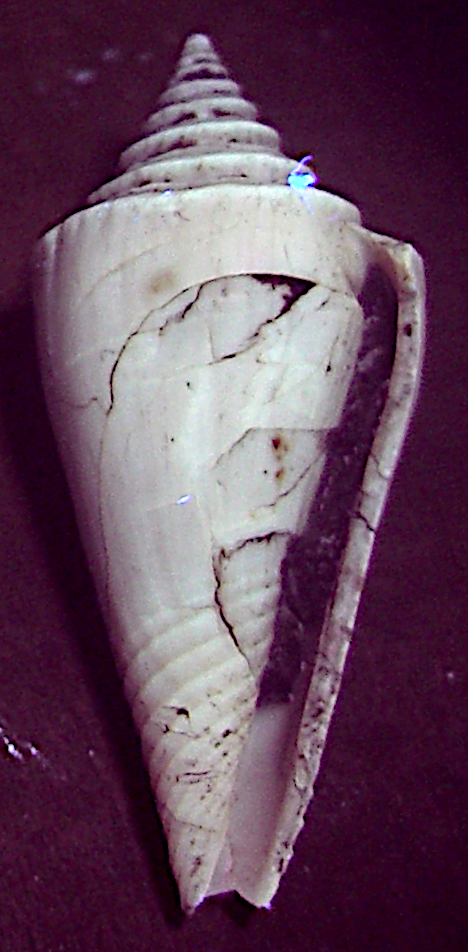
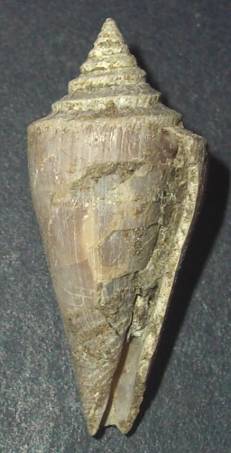
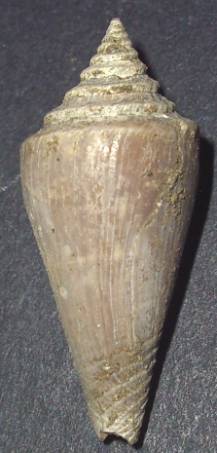
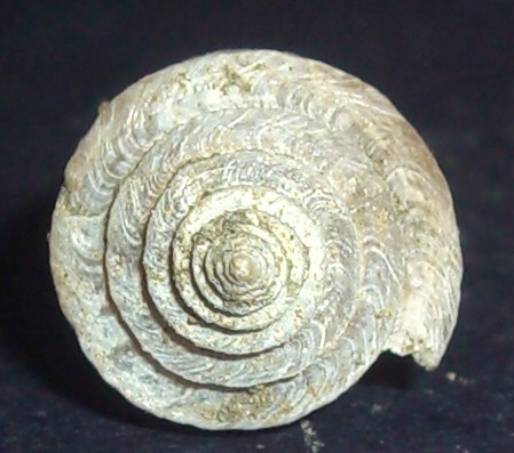
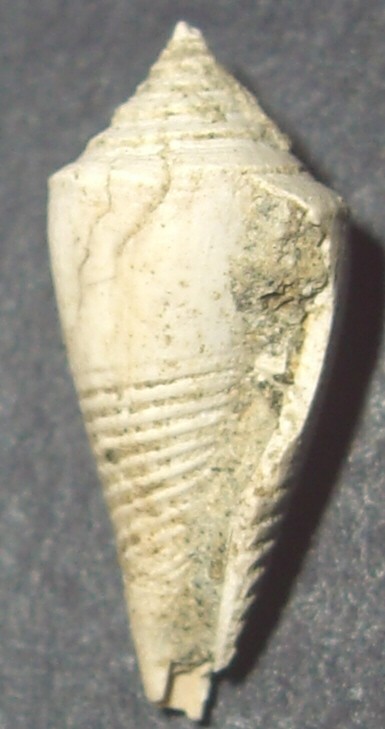
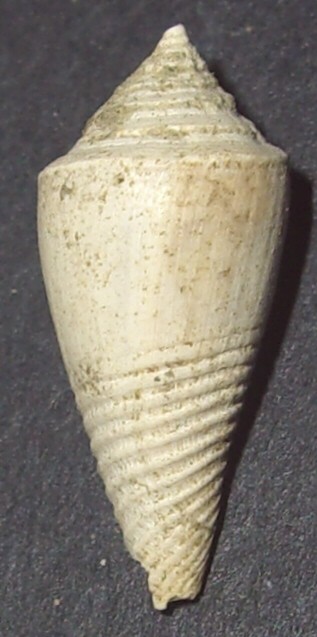
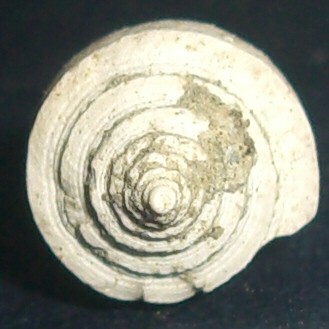
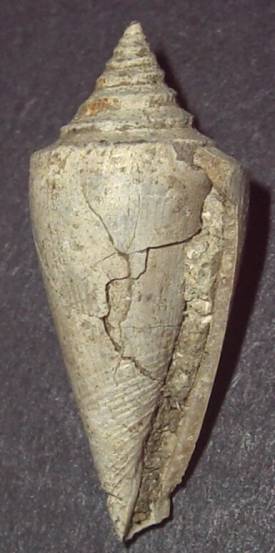
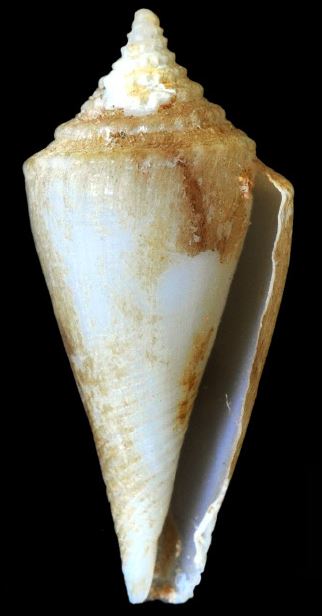
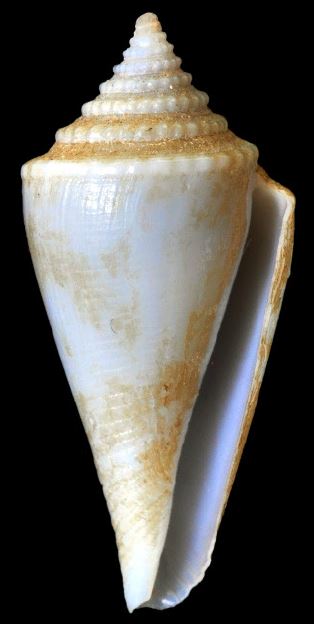
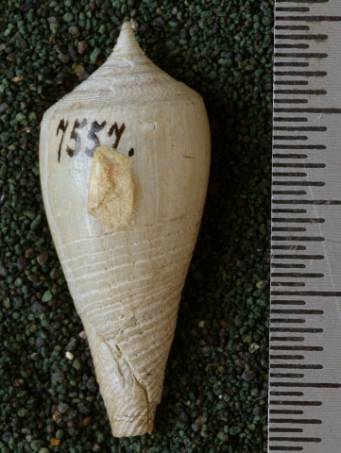
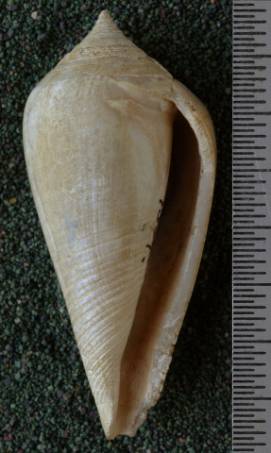
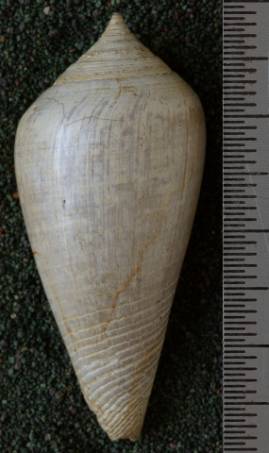
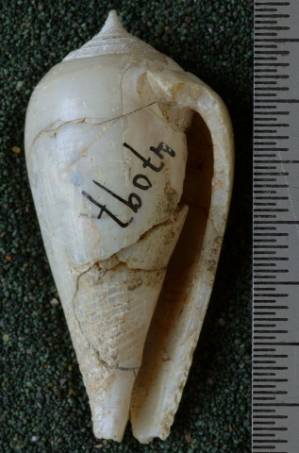
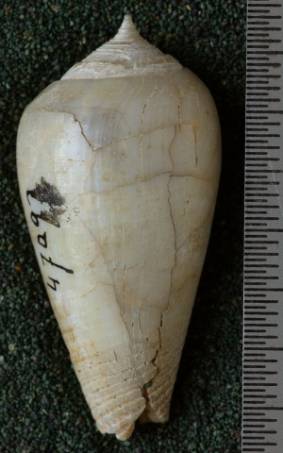
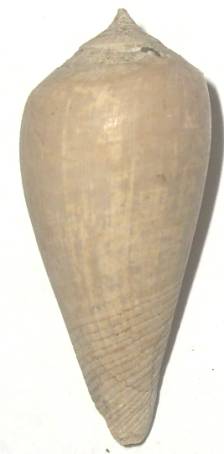
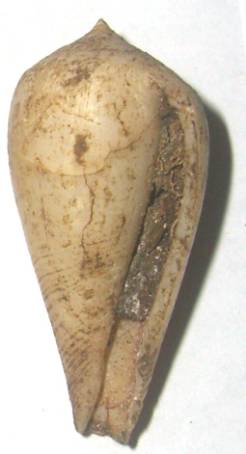
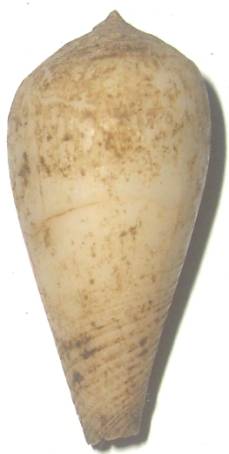
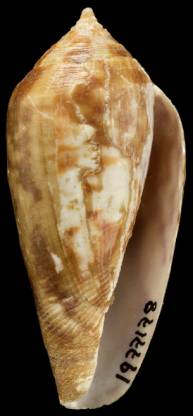
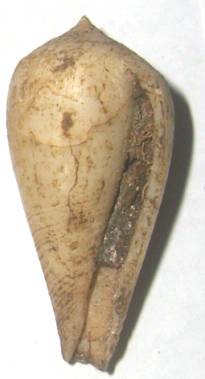
Conus dingleanus (Beets, 1984)
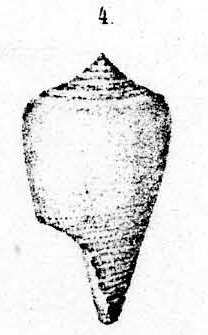
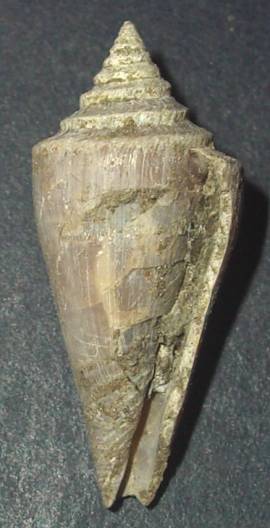
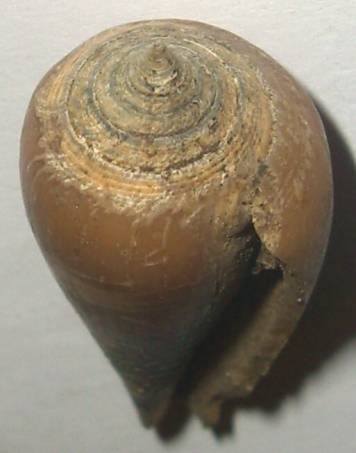
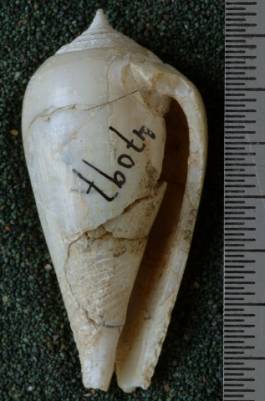
Conus jenkinsi (Martin, 1879)
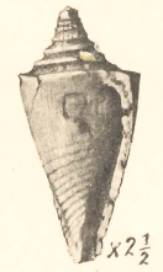
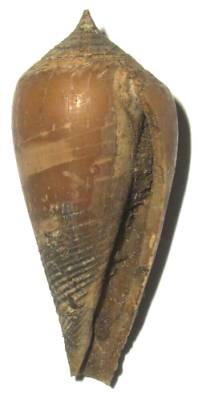
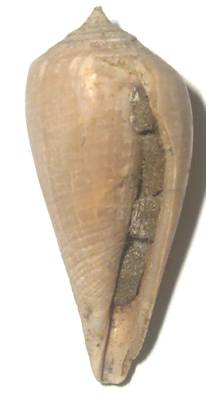
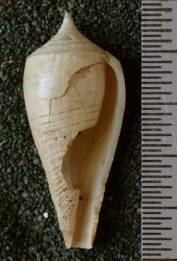
Conus martini (Wanner & Hahn, 1935)
Conus martini (Shuto, 1969)
Conus jenkinsi (Martin, 1879)
Das Gewinde, aus sieben flachen Umgangen bestehend, hebt sich nur mit seinen alteren Umgangen ziemlich spitz empor. Jeder tragt vier bis funf Querstreifen, von denen derjenige, welcher der Naht anliegt, durch besondere Scharfe ausgezeichnet ist, und dadurch eine, die Naht begleitende Binde hervorbringt. Die ubrigen Streifen sind zart; die Suturen scharf.
Die Schlusswindung ist hinten zugerundet, aber dennoch sind an ihr eine vordere und hintere Flache durch eine sehr deutlich Kante geschieden; ihre grosste Breite lieg ein wenig vor der Letzteren.
Der Stirnabschnitt des Gehauses traght dreizehn, deutlich ausgepragte Queistreifen, welche seine Oberflaiche bis zur Mitte der Lange- einnehmen. Zwischen die der Stirn am nachsten gelegenen Streifen schieht sieh noch je ein feineren ein. Das Fossil ist hellbraun gefarbt.
Diese Form ist sehr nahe verwandt mit C. lacteus Lam. sowie andererseit; mit C. martinianus Reeve; uhne dass sichi indessen unter den zum Vergleiche herangezogenen Exemplaren dieser Arten ein Individuum gefunden hatte welehes mit dem fossilen vollkommene Uebereinstimmung zeigte.
Das einzige Exemplar stammt vom Fundorte: 0.
La spira, composta da sette spire piatte, sale piuttosto bruscamente solo con le spire più vecchie. Ciascuna ha da quattro a cinque strisce orizzontali, di cui quella che si trova contro la cucitura è particolarmente nitida e crea così una fascia che accompagna la sutura Le restanti strisce sono tenere; le suture affilate.
La piega finale è arrotondata posteriormente, ma presenta comunque una superficie anteriore e posteriore separate da un bordo molto netto; la sua larghezza massima si trova un po' davanti a quest'ultimo.
La parte anteriore dell’ultimo giro presenta tredici strisce chiaramente pronunciate, che ne ricoprono la superficie fino alla metà della sua lunghezza. Tra le strisce più vicine alla fronte ce n'è una più fine. Il fossile è di colore marrone chiaro.
Questa forma è strettamente imparentata con C. lacteus Lam. così come d'altra parte; con C. martinianus Reeve; senza il fatto che, tra gli esemplari di queste specie utilizzati per il confronto, fosse stato trovato un individuo che mostrasse completa concordanza con il fossile.
L'unico esemplare proviene dal luogo in cui è stato ritrovato.
|
|
|
|
Martin described Conus jenkinsi on the basis of a single imperfect specimen from Vindplaat, ovest of Java (1879-80, p.10, Tab.1, f.4).
Conus martini (Shuto, 1969)
|
|
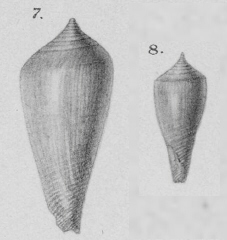
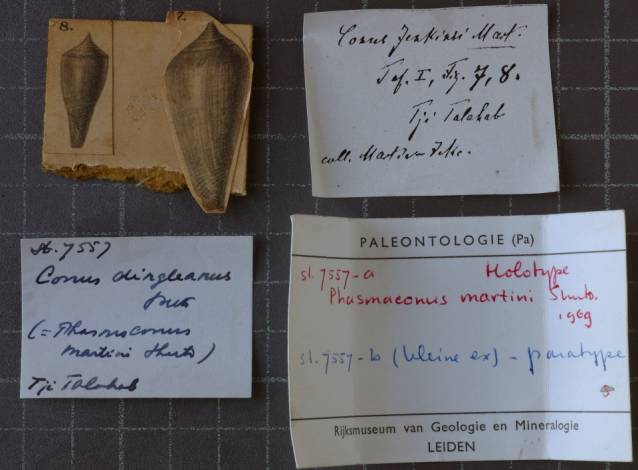
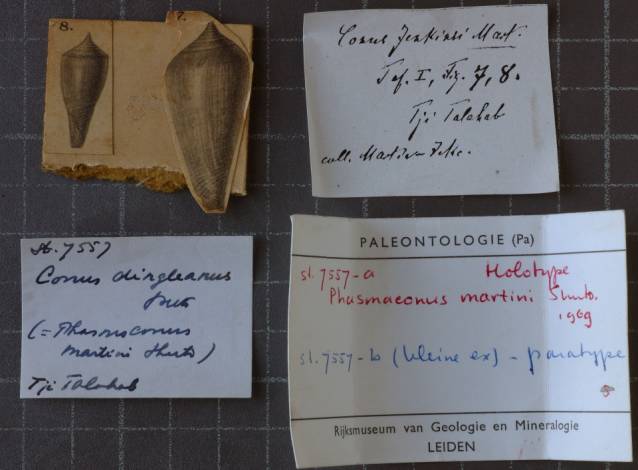
Later, Martin redescribed on the material from the Njalindoen bed (1921, p.448, Taf.58, fs.7 and 8) as Conus jenkinsi.
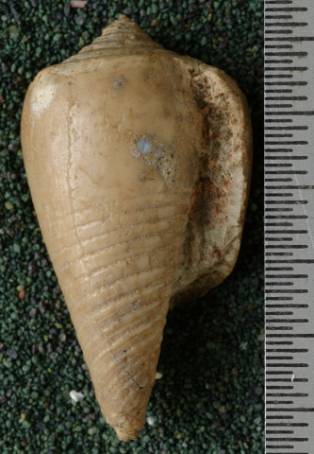
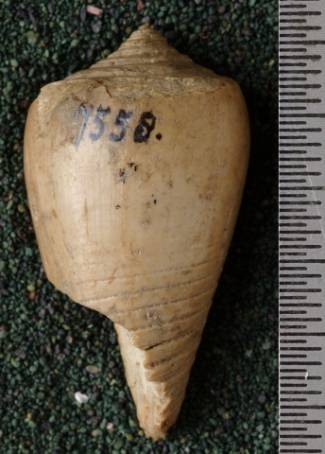
Detailed examination of the specimens mentioned above unfortunately leads to the conclusion that the specimens from the Njalindoeng bed are quite different from the original type in the ornamental pattern of the shoulder as is indicated in Text 6 fig. 42 and should be separated specifically from the latter (2). Hence Shuto prefers to give a new name to the Njalindoeng material in honor of late Professor MARTIN (2).
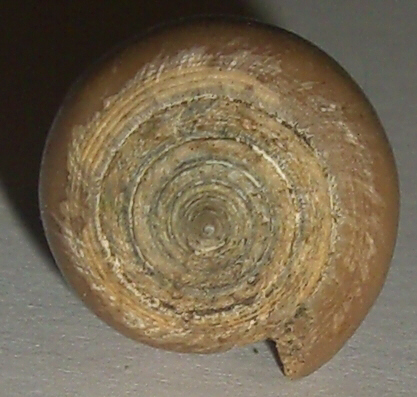
The protoconch of Conus martini is high conical and polygyrate, but the details are not examined because of abrasion. The early teleoconch whorls are provided with very prominent wide and smooth peripheral carina The surface above the carina is concave and moderately sloped. The lateral surface below the carina is almost vertical at first and is perfectly overlapped by the succeeding whorl later. The peripheral carina becomes weak and further rounded on the later whorls to illustrate roundly curved periphery. The spiral sulcae are developed on the lower part of the basal surface and on the shoulder. The basal sulcae are shallowly U shaped and crossed by the growth lines. The sulcae on the shoulder are generally shallow and narrow. They are five on the later whorls, upper two of five are distinctly stronger and separated each other by wider interspaces 七than the other three (2).
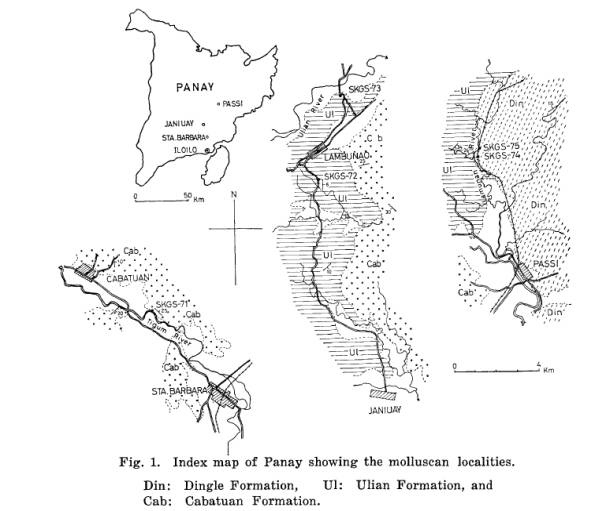
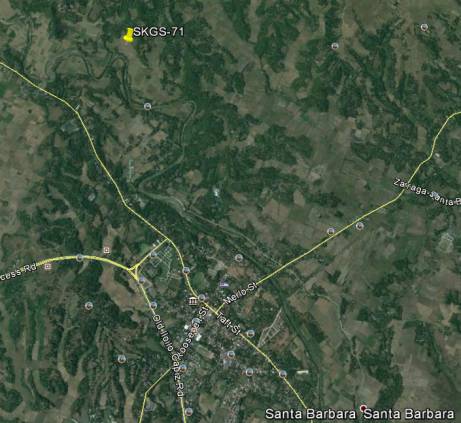
Cabatuan formation extends from Late Pliocene to Pleistocene.
|
|
|
|
|
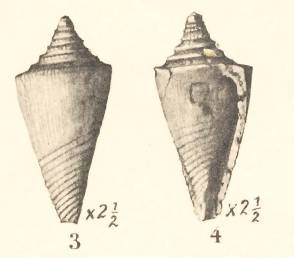
Conus martini (Wanner & Hahn, 1935)
E’ una piccola conchiglia a forma di doppio cono. La spira occupa 1/3 dell'altezza del giro finale, concava nel profilo, con 2 giri embrionali e 6 giri centrali a gradini. Questi talloni si abbassano nelle curve più giovani, ma il bordo a spirale risalta ancora chiaramente anche qui. Le strisce crescenti della spira sono curvate all'indietro convessamente e così nettamente definite che le poche strisce a spirale sono difficili da vedere, anche sotto una lente d'ingrandimento.
L’ultimo giro è quasi liscio sulla metà posteriore, con strisce incrementali solo leggermente nette e con maturazione a spirale appena percettibile, sulla metà anteriore invece con 15 nuovi solchi a spirale distinti, che diventano troppo larghi verso la fronte, e con strisce di crescita evidenti nei solchi nel mezzo. Il labbro parte sotto la linea di cucitura con un solco ampio e gonfio che si incunea nell'ultima curva.
Il mandrino ha girato un po '.
Lunghezza dell'intera conchiglia 12 mm; lunghezza della spira 3 mm; larghezza massima 5 mm.
Gehäuse klein, doppelt kegelförming; Gewinde last 1/3 so hoch die Schlußwindung, im Profil konkav, mit 2 embryonalwindungen und 6 treppenforming abgesetzten Mittelwindungen. Auf den jungeren Windungen werden diese Absätze niedriger, doch hebt sich auch hier die Spiralkante noch deuttlich ab. Zuwachsstreifen des Gewindes konvex nach hinten gekrümmt und so scharf ausgeprägt, daß die wenigen Spiralleisten selbst unter der Lupe nur schwer sichtbar sind.
Schlußwindung auf der hinteren Hälfte fast glaft, mit nur wenig scharfer Zuwachsstreifung und mit kaum erkeunbarer Spiraltreifung, auf der vorderen Hälfte jedoch mit 15 markanteu Spiralfurchen, die nach der Stirn zu breiter werden, und mit deutlichen Anwachsstreifen in den Furchen dazwischen.
Tunenlippe unter der Naht-linie mit einer breiten, liefen Quelfurche, die auf der Schlußwindung auskeilt. Spindel etwas gedreht.
Länge des ganzen Gehäuses 12 mm, Länge des Gewindes 3 mm; größte Breite 5 mm.
|
|
|
|
|
|
|
|
|
|
|
|
|
|
|
|
|
|
|
|
|
|
|
|
|
|
|
|
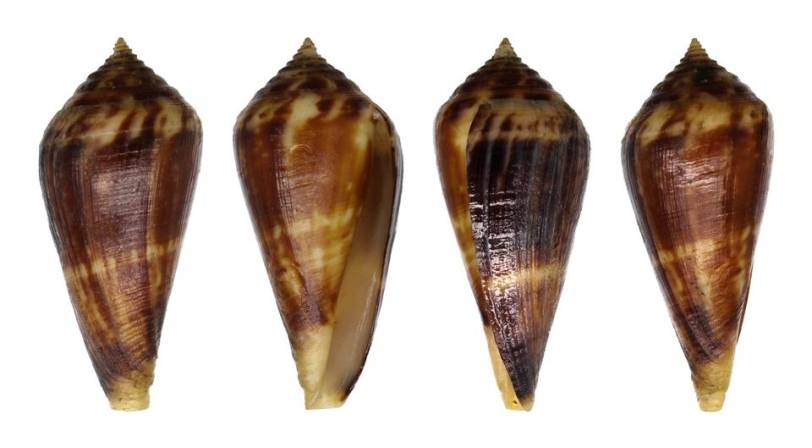
Profundiconus loyaltiensis (Röckel & Moolenbeek, 1995)
Shell small (maximum length 24.5 mm), biconic with a moderate spire of deeply concave outline. Protoconch white, porcellaneous, with 1.5 whorls. Radular tooth rather large. Anterior portion of tooth much shorter than posterior section. Barb and pointed, well-defined blade approximately one half of apical portion of tooth. External cusp present, laterally widened and serrated, with 5–6 denticles. Characteristic fringe of closely spaced projections pointing towards the apex located immediately below waist. Shaft fold present. Large and prominent basal spur on top of slanted base of tooth. The name P. loyaltiensis applies in the strict sense to shells coming from the Loyalty Islands having a moderate, concave spire with strong cords on the sutural ramp. It is not clear if these are conspecific with the specimens from Île des Pins and the Grand Passage area, which normally exhibit shells with less developed cords, and are often confused with the white form of P. vaubani. Specimens of P. loyaltiensis from the type locality have not been examined using DNA. The sequenced specimens actually correspond to the population from Île des Pins, and these appear in a clade mixed with specimens assigned to P. vaubani and P. kanakinus. This observation is consistent with the fact that the alleged population of P. loyaltiensis from Île des Pins and the white form of P. vaubani might represent the same species. Therefore, the distribution range of the true P. loyaltiensis is possibly restricted to Loyalty Ridge, but this hypothesis requires confirmation (9).
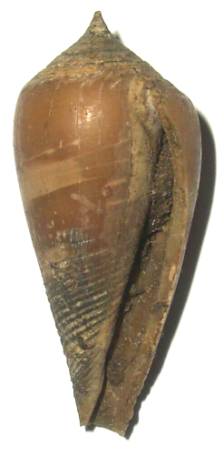
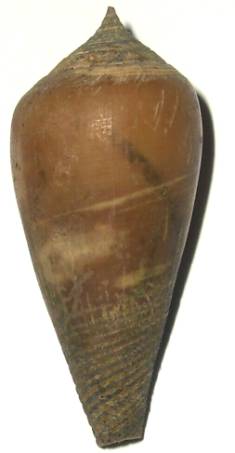
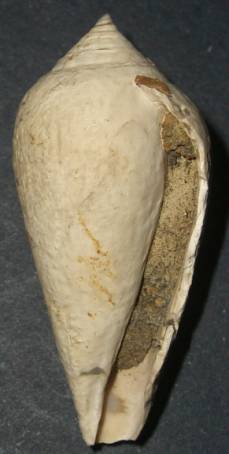
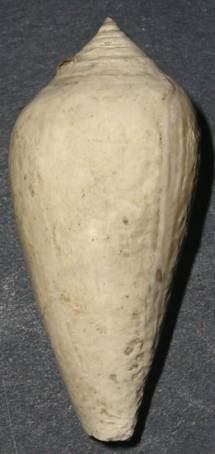
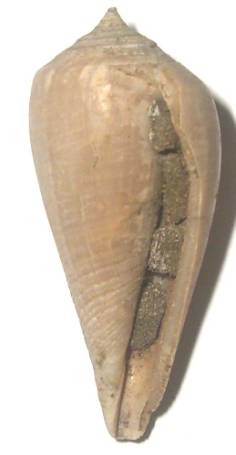
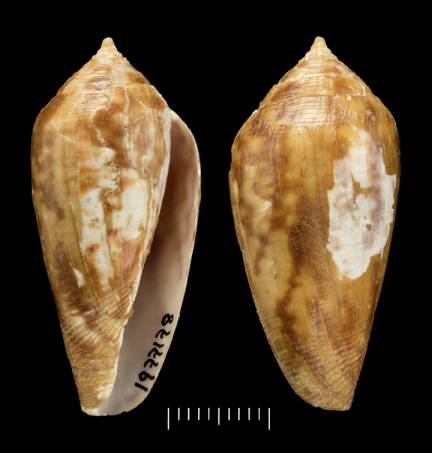
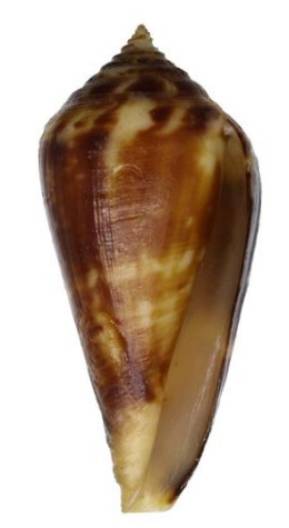
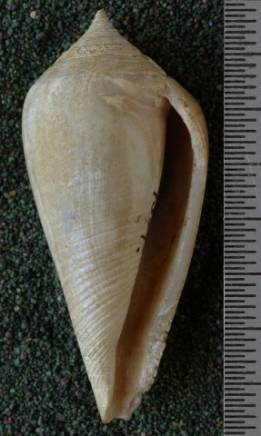
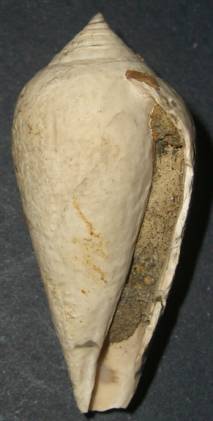
Conus dingleanus (Beets, 1984)
Il nome C. dingleanus è stato proposto da Beets a causa della preesistenza del nome C. martini (Wanner & Hann,1935), una specie del Miocene, anch’essa rinvenuta a Java.
Conus dingleanus nom. nov. Material — RGM 315 231-315 232. Range—Early Miocene to Pliocene: Rr (Ra?) - Nj - U M (Upper Dingle Formation) - P.
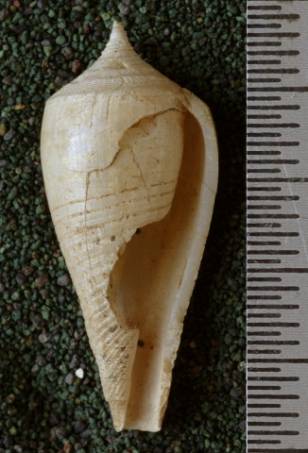
Comments — This is Phasmoconus martini Shuto, 1969 non Conus martini Wanner & Hahn, 1935. The type of C. jenkinsi Martin, 1879 from the Tjilanang Beds is indeed very different from the Njalindung shells subsequently referred to it by Martin: 1921-1922, pp. 448, 492, pl.l, figs. 7-8 (perhaps also: Martin, 1928b, pp. 13, 23, 27; Oostingh, 1938-1940, prt 1, p. 20).
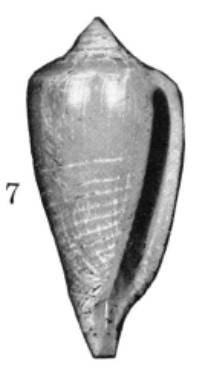
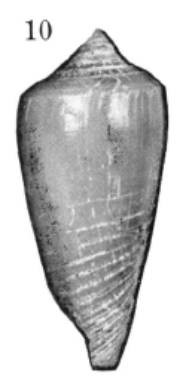
The Njalindung shells were therefore very properly renamed by Shuto (1969, p. 222, pi. 22, figs. 7, 10, text-fig. 42) as Phasmoconus martini; but, by believing the latter to be congeneric with Conus martini Wanner & Hahn (1935, p. 241, pi. 17, figs. 3-4), the writer prefers providing P. martini, as junior secondary homonym, with the new name Conus dingleanus, the name being derived from the Dingle Formation of Panay.
In the Mandul collection is a series of twenty specimens, on the whole well preserved, which match Martin's Njalindung shells beautifully. Spiral ornament may in exceptional cases cover the entire body whorl, though gradually getting weaker towards the shoulder or even vanishing but for the presence of very fine spiral striations. Due to poor preservation of the apical portion it is still impossible to say how many whorls make up the protoconch (1).
Epoca: Miocene, Pliocene
Località: Java, Borneo
|
|
|
|
|
|
|
|
|
|
|
|
|
|
|
|
|
|
|
|
|
|
|
|
|
|
|
|
|
|
|
|
|
|
|
||||
|
|
|
|
||||
|
|
|
|
|
|||
|
|
|
|
|
|||
Bibliografia
(10) - (2008) “New records and new species of cones from deeper water off Fiji (Mollusca, Gastropoda, Conidae)” R.G. MOOLENBEEK