|
|
|
|
|
|
|
|
|
|
Conus fulmen (Reeve, 1843)
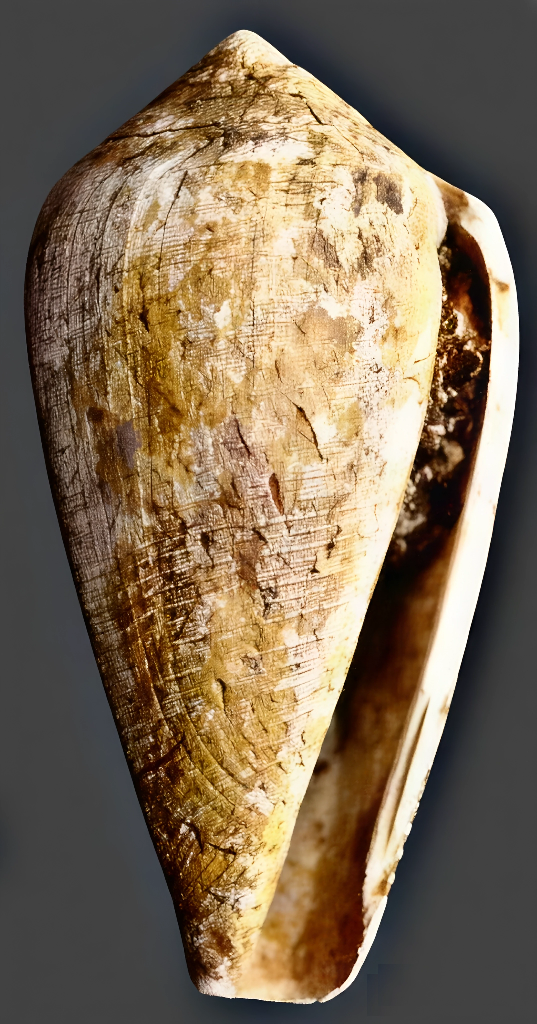
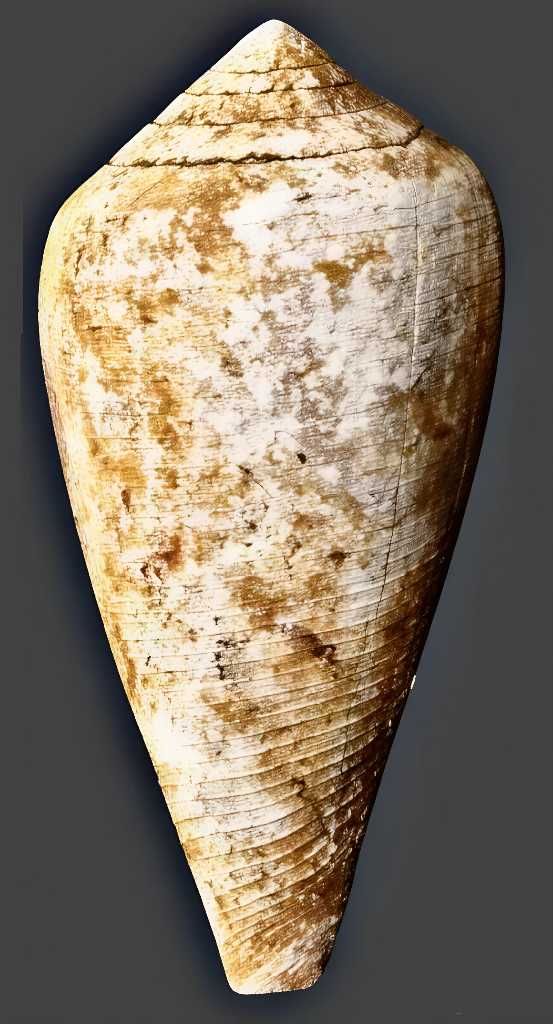
Material (2): ESN2889, a mature specimen missing the outer lip and the anterior end of siphonal canal, collected from pebble conglomerate of the Dainichi Formation (upper Pliocene) exposed in a northfacing roadside cliff at Gomyo, Kakegawa City, Shizuoka Prefecture, Japan (Lat. 34°47'25"N, Long. 138°0'26"E).
Description (2): The shell is medium-sized. The last whorl is ventricosely conical with its outline convex adapically. The shoulder is subangulate to rounded. The spire is moderately high with its outline straight. The larval shell is dissolved and unknown. The early teleoconch is tuberculate. The teleoconch sutural ramps are almost straight and sculptured by about four spiral grooves. The base is ornamented by broad spiral ribs, but the upper two-thirds of the body whorl is smooth.
Measurements (mm) (2): Н 44.1+, MD 19.8, AН 36.3+, РMD 30.8+ (ESN2899).
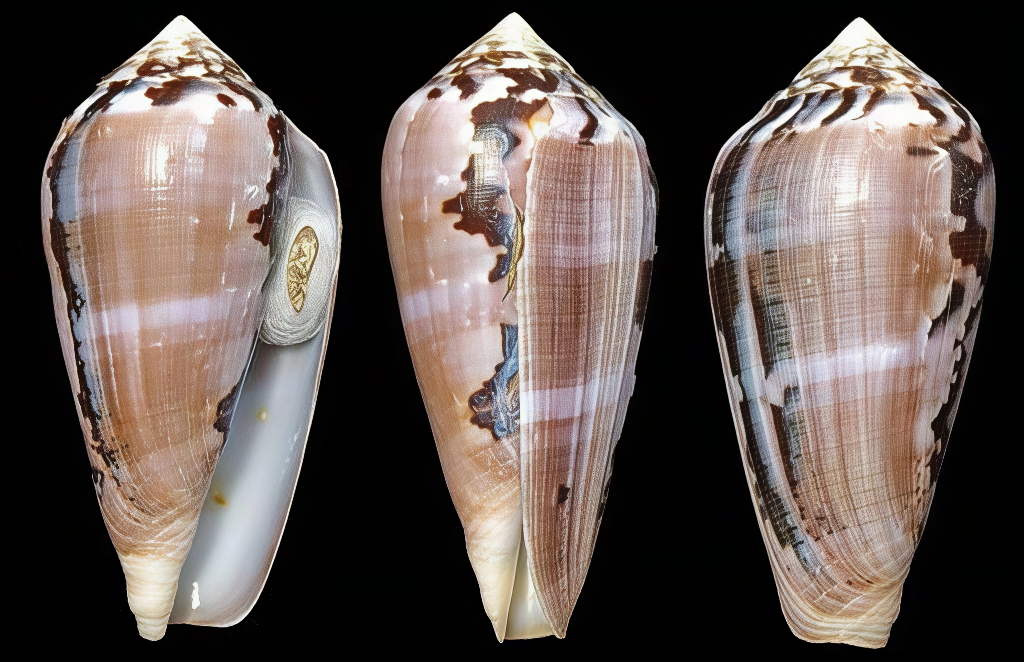
Distributions (2): Upper Pliocene, Dainichi Formation in Shizuoka Prefecture (present study). Lower Pleistocene, Umegase Formation in Chiba Prefecture (Baba, 1990). Living: South of Boso Peninsula to Taiwan (Kira, 1962; Röckel et al, 1995).
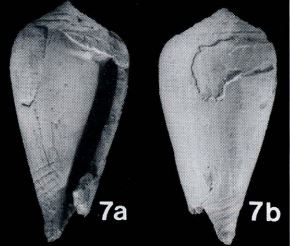
Remarks (2): Chelyconus fulmen resembles Conus (s.l.) kinoshitai (Kuroda, 1956) in shell characters, but is distinguished from the latter by having a more-rounded shoulder. Chelyconus fulmen also resembles Chelyonus circumcisus (Born, 1778), but differs from it by having a broader body whorl. This is the first record of Chelyconus fulmen from a Pliocene fauna in Japan.
The fossil specimen has a broken lip and therefore, in dorsal view, it appears narrower at the base.
The Philippihe fauna, here called the Pitogo fauna provisionally, provides rare opportunity for comparative study. of the Japanese lower Miocene fauna with the Philippine fauna in species to species basis. The Pitogo fauna is, in conclusion, similar in ecological and taxonomical nature to the Japanese Kadonosawa-type fauna. In the early Miocene age, the same faunal province covered both the Japanese and Philippine Islands where the molluscs consist of the similar species association found in sediments in the similar environment.(3).
|
|
|
|
|
|
|
|
|
|
Bibliografia