|
|
|
|
|
|
|
|
|
|
|
|
|
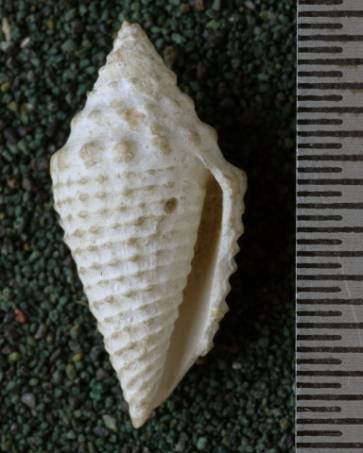
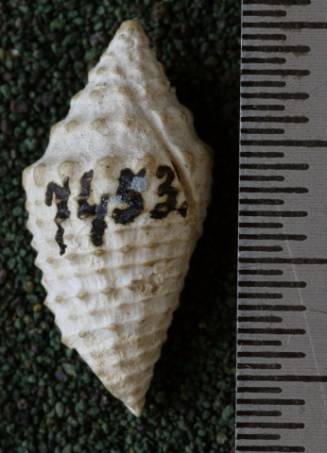
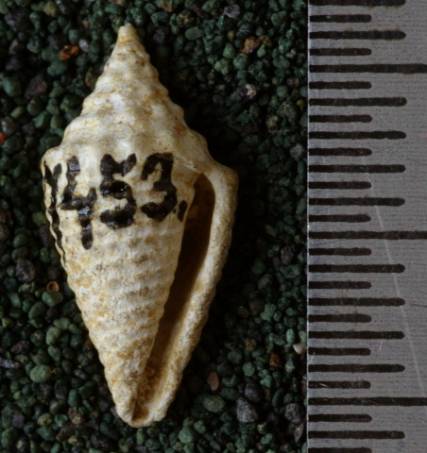
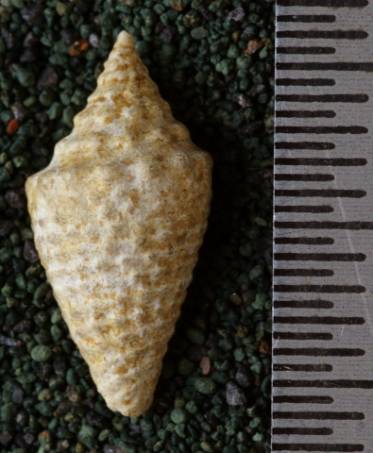
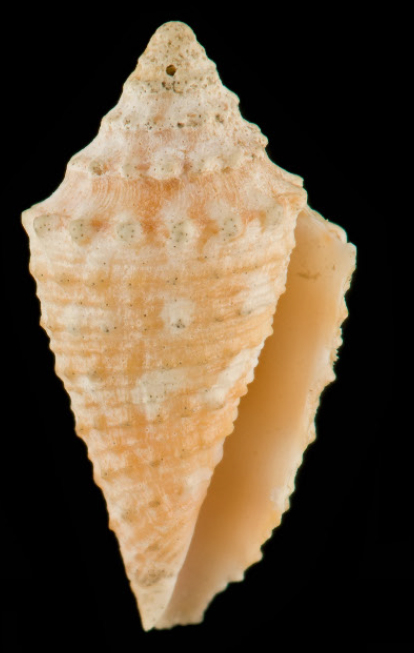
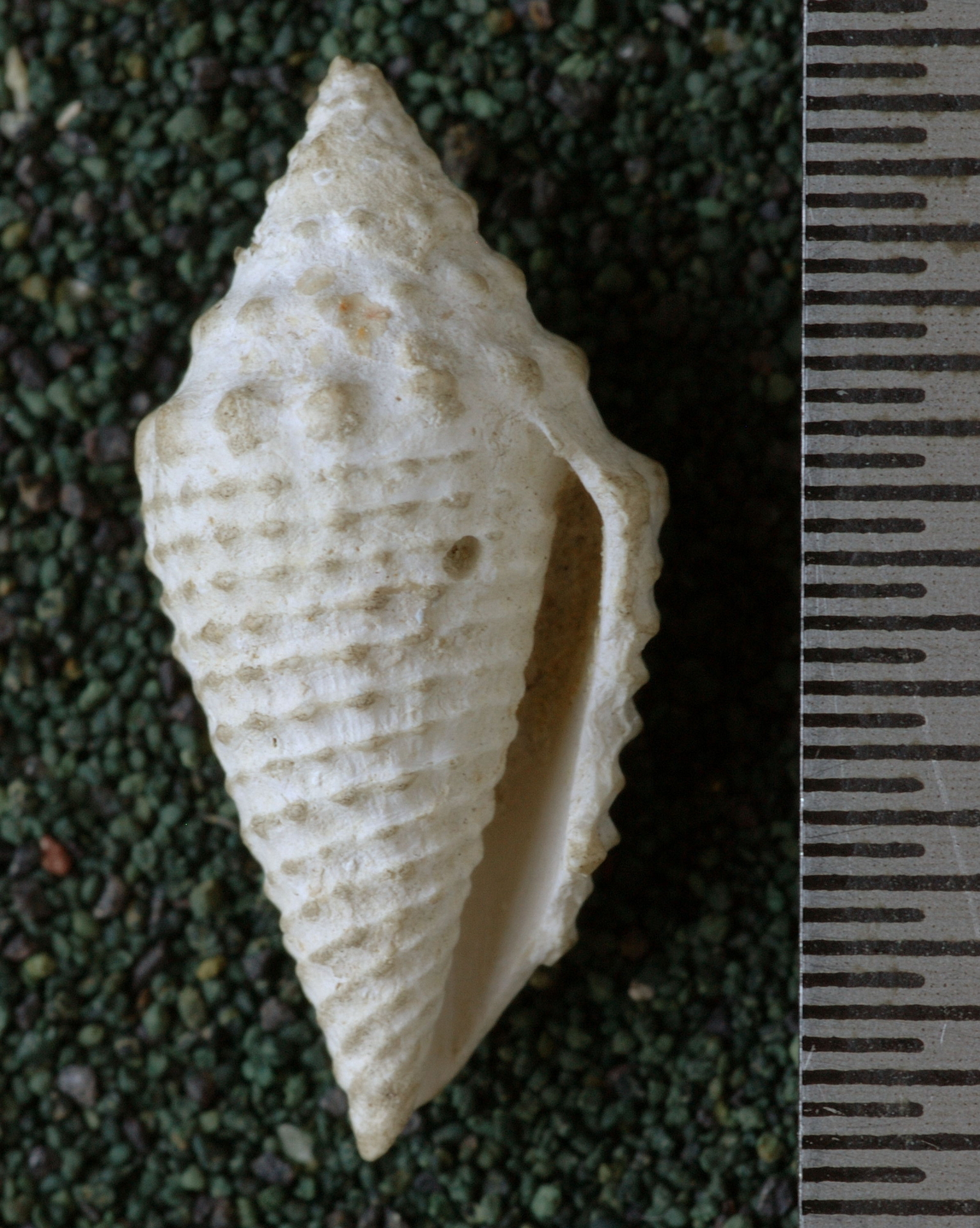
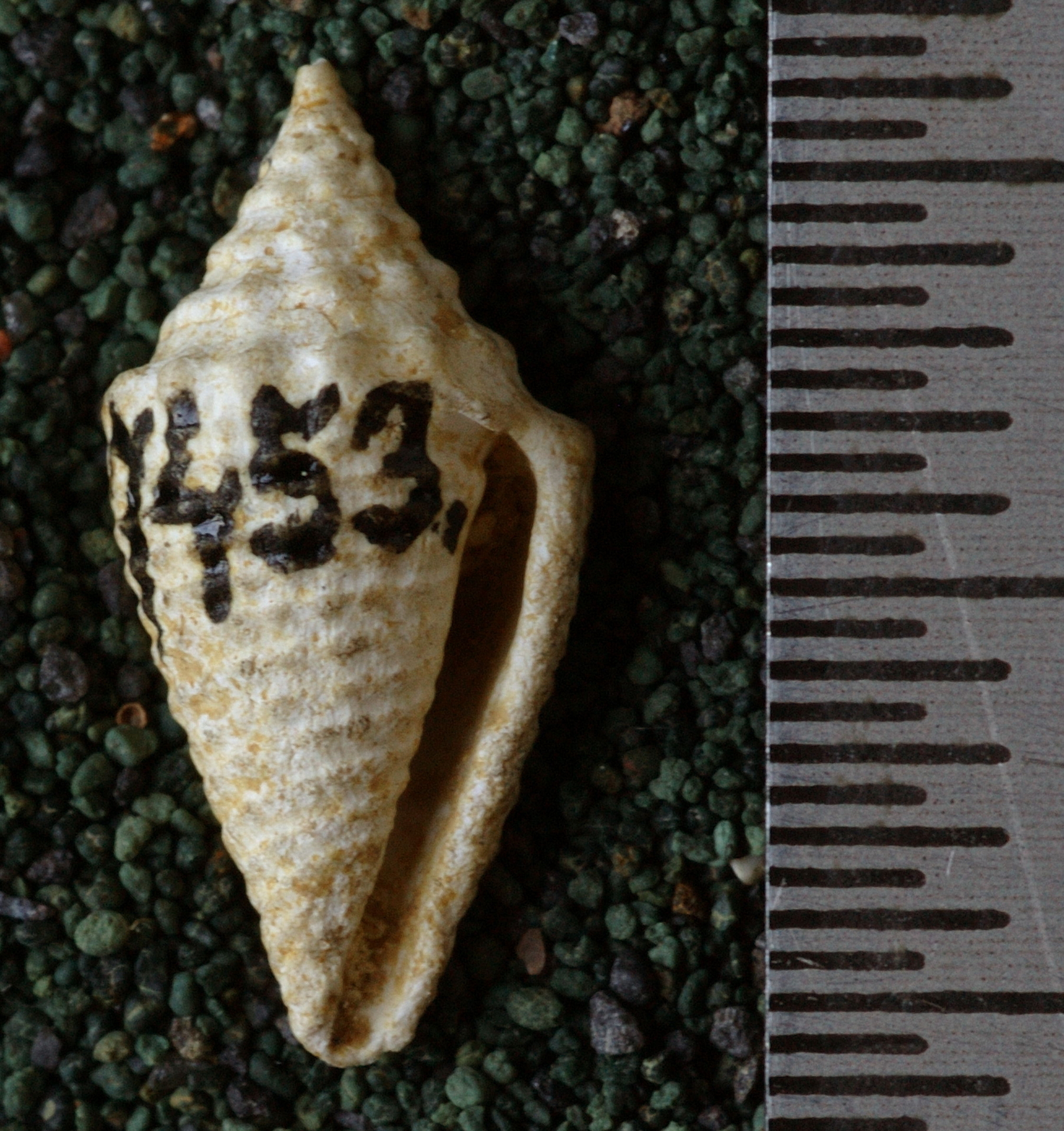
Conus gembacanus (Martin, 1884)
Die Schale ist verlangert, spindelformig, mit hohem, aus acht Umgangen bestehendem Gewinde versehen, welches regelmassig conisch ist, mehr als ein Drittheil der ganzen Schalenlange einnimrnt und von zahlreichen Knoten gekront wird. Die ebenfalls sehr regelmassig conische Schlusswindung verjungt sich rasch nnd wird in ihrer ganzen Ausdehnung von ziemlich dicht stehenden Spiralstreifen bedeckt, welche viele langs gestreckte Knotchen tragen.
Conus nodiferus Kien. (Iconogr. pag. 228, tab. 100, fig. 4) steht dem Fossile sehr nahe, unterscheidet sich aber durch die Spiralfurchen der Schlusswindung, welche unserer Art ganzlich fehlen. Auch C. varius Lin. gehort zu den naheren Verwandten, ist indessen durch das minder hohe Gewinde , die vordere Zusammenschnurung der Schlusswindung und die rundliche Form der sie zierenden Knoteu wohl getrennt.
Anzahl der untersnchlen Exemplare: 2. Fundort: Ngembak.
The shell is elongated, fusiform, highly threaded, eight turns, regularly conical, occupying more than a third of the total length of the shell, and crowned by numerous nodes. The conical final whorl, also very regular, tapers rapidly and is covered in its entire extent by fairly dense spiral strips, which bear many elongated nodules.
Conus nodiferus Kien. (Iconogr. pag. 228, tab. 100, fig. 4) is very close to the fossil, but differs in the spiral furrows of the terminal whorl, which are entirely absent in our species.
Also C. varius Lin. belongs to the closer relatives, is however well separated by the less high thread, the front constriction of the final whorl and the rounded shape of the knots that adorn it.
Number of specimens: 2. Locality: Ngembak.
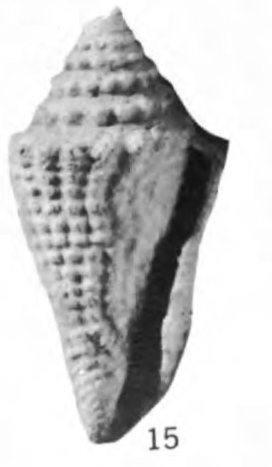
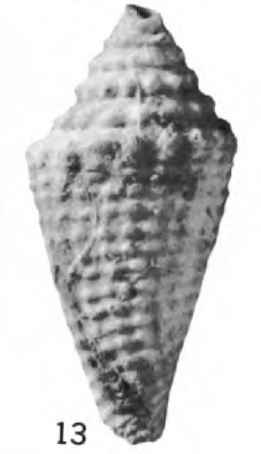
Conus cf. C. gembacanus Martin Plate 26, figures 13-15
A small shell with a high turreted spire; body whorl covered by about 20 strongly beaded axial ribs; the row of beads at the periphery more prominent than others.
Measurements of the figured specimen, USNM 214347: length 8.2 mm, diameter 4.1 mm.
This strongly sculptured cone is sm~aller than the shell described by Martjn (1883-87, p. 49, pl. 4, fig. 49) ; it has more numerous beaded spirals and a more strongly turreted spire than does that species.
Occurrence.-A single specimen from USGS locality 25731 on the Navaka River, Santo, New Hebrides; age, Pleistocene. Martin described C. gembacanus from the Miocene of Java (4).
|
|
|
|
|
|
|
|
|
|
|
|
|
|
|
|
|
|
|
|
|
|
(5) - (2023) “Revision of the deep-water cone snail fauna from New Caledonia (Gastropoda, Conoidea)” Manuel J. TENORIO & Nicolas PUILLANDRE