|
|
|
|
|
|
|
|
|
|
|
|
|
|
|
Conus recognitus (Guppy, 1876)
Remarks (1)
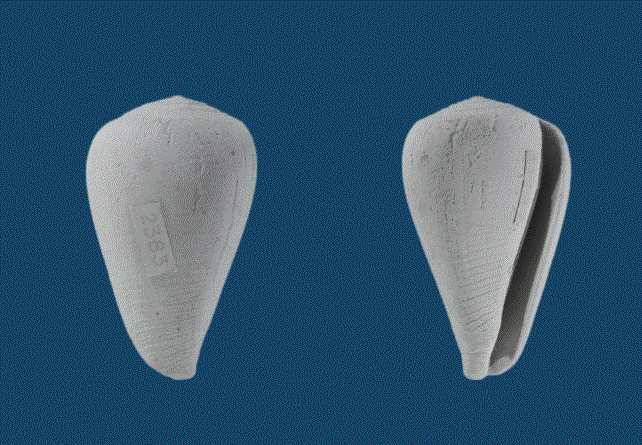
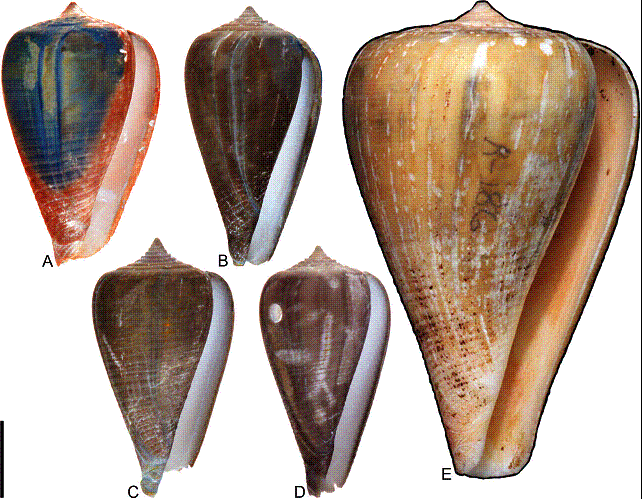
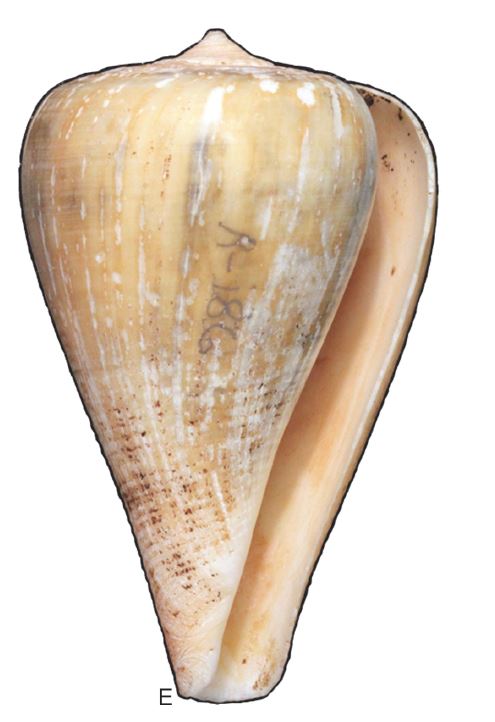
The specimens of C. recognitus illustrated here (Fig. 17A-D) do fluoresce, but do not show evidence of a distinctive pattern, supporting the description provided above of a solidly pigmented ground pattern. The distinctive shell shape of C. recognitus separates the species from co-occurring fossil species. Conus recognitus is very similar in shell form to the extant eastern Pacific species C. patricius Hinds, 1843, an association also recognized by Woodring. The coloration pattern of Conus patricius (e.g., Fig. 17E) consists of a solid, cream-colored base pattern that sometimes also exhibits subtle spiral and/or axial bands of slightly different color. The patterning of C. patricius explains the undifferentiated regions of fluorescence shown here in C. recognitus.
Tucker and Tenorio assigned C. recognitus to the genus Pyruconus Olsson, 1967, which Puillandre et al. recognized as a subgeneric ranking. This assignment is followed here for C. recognitus.
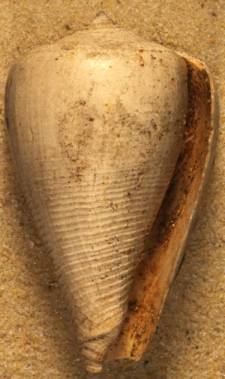
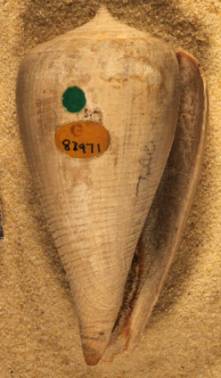
Testa turbinata, conica, crassa, levis, spira subproducta, levi, anfractuum marginibus rotundato-elevatis; anfractu ultimo striato, striis paucis, subobsoletis, canali recto.
This fossil is remarkable for retaining some traces of its living colours, the spire is marked with light rusty-brown dashes, and there are three rows of spots of the same colour on the last volution.
|
|
|
|
|
|
|
|
|
|
|
|
|
|
|
|
|
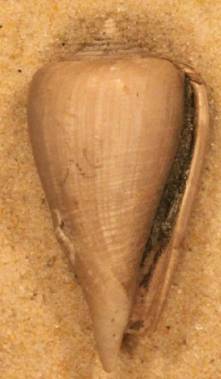
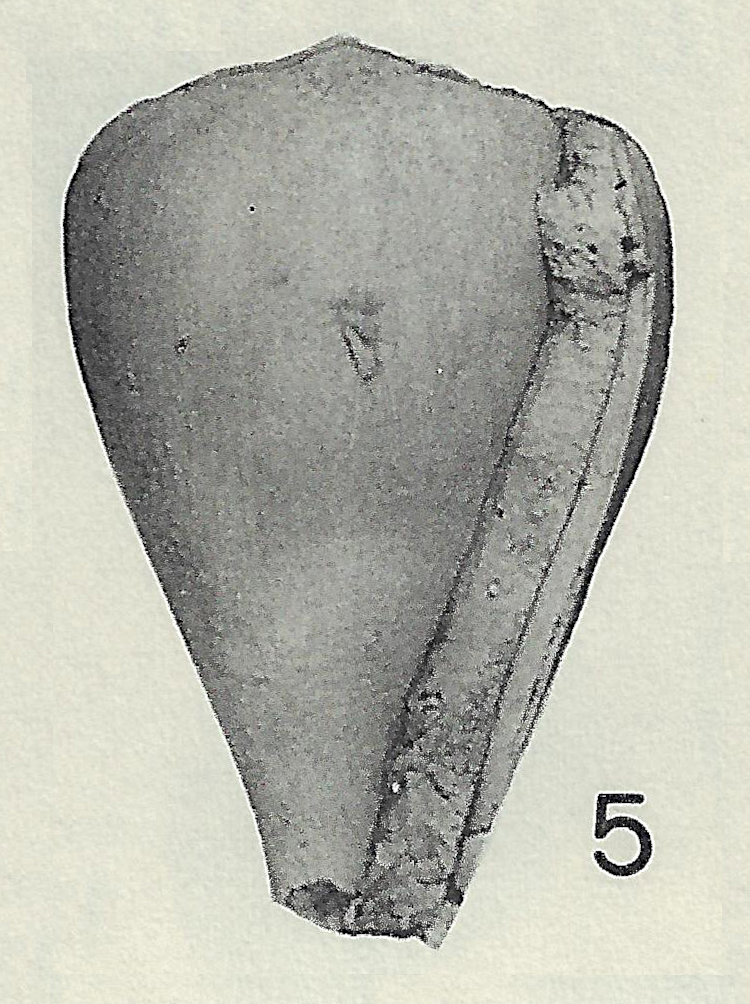
Conus cf. Patricius (Olsson, 1964)
A
cone belonging to the C.
recognitus-patricius
group, the shape, pyriform, solid, the shoulder smoothly rounded, the
whorls so closely coiled so that each whorl seems to embrace or
overlap the suture of the preceding turn, the narrow surface of the
exposed spire whorl or the subsutural fasciole flat or slightly
convex, marked with the growth line trace of a shallow anal sinus and
subobsolete spirals
(5).
The
figured specimen from Barro Colorado on the Río Santiago measures
height 41 mm., greater diameter 27 mm. USNM 643937. C.
patricius
Hinds (C.
pyriformis
Reeve) is a recent
species, the largest and heaviest in the Panamic-Pacific faunal zone
(5).
Angostura
formation: Telembi, Río Cayapas.
Borbon formation: Barro Colorado, Río Santiago.
Esmeraldas
formation: Punta Gorda
(5).
|
|
|
|
|
Bibliografia Consultata
(5) - Olsson, A. A., 1964. Neogene Mollusks from Northwestern Ecuador