|
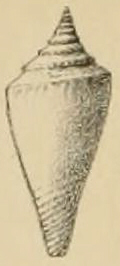
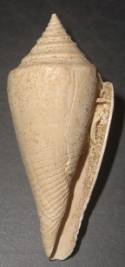
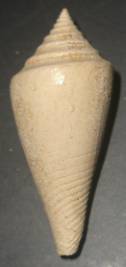
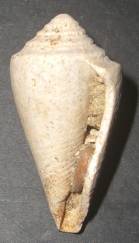
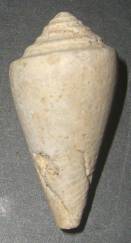
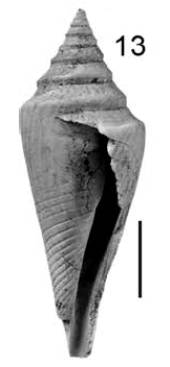
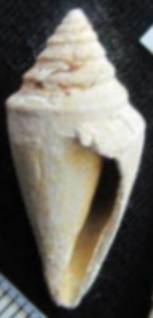
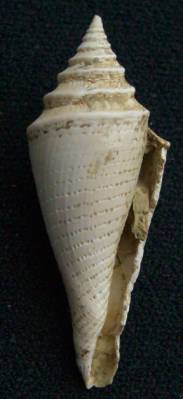
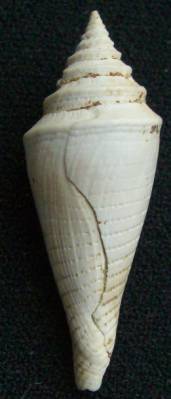
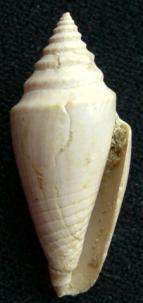
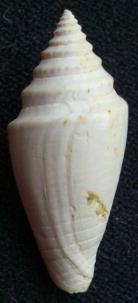
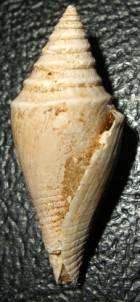
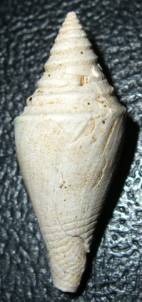
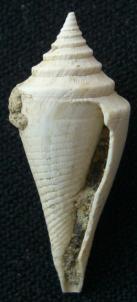
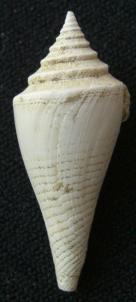
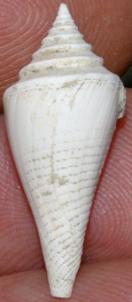
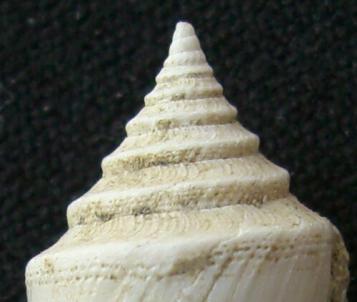
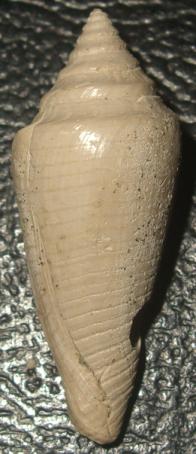
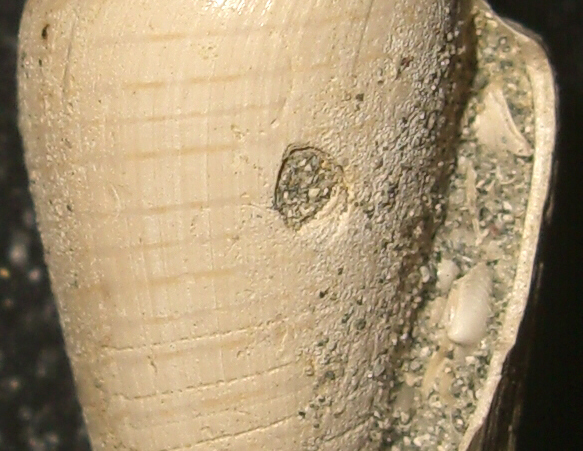
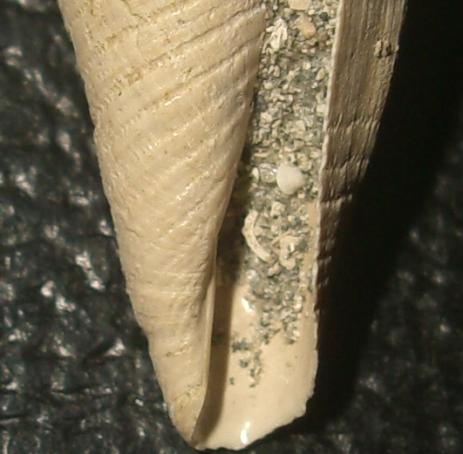
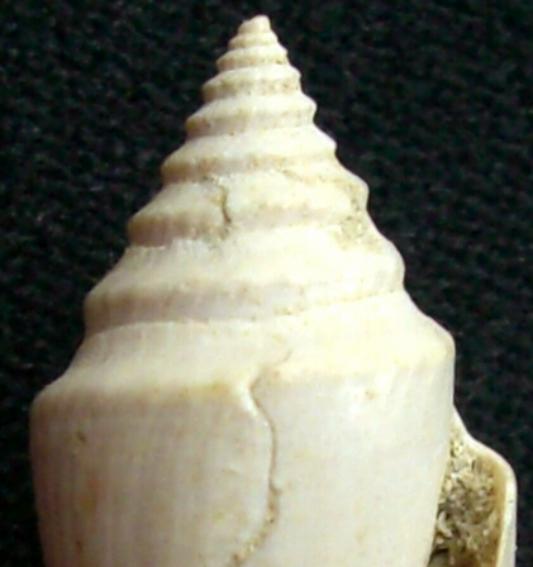
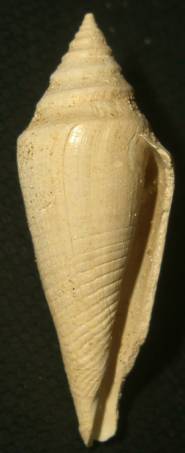
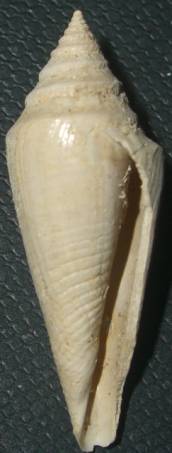
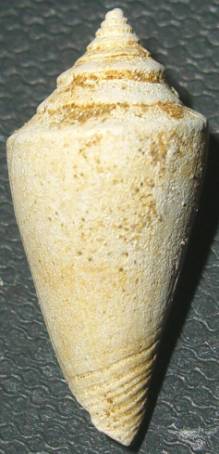
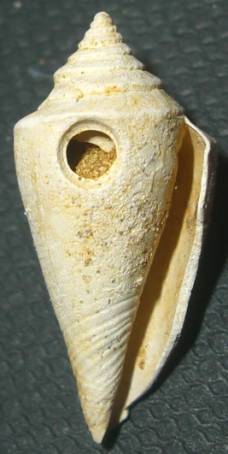
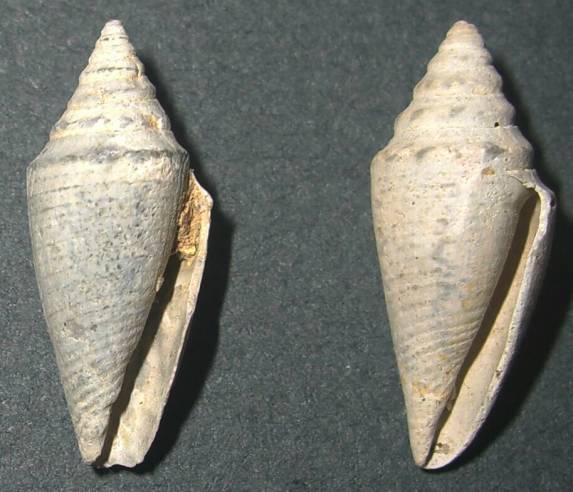
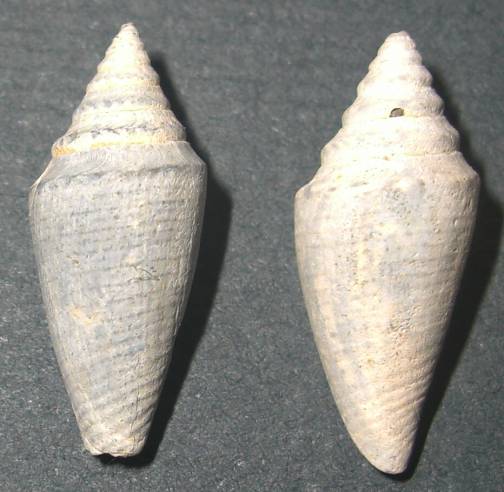
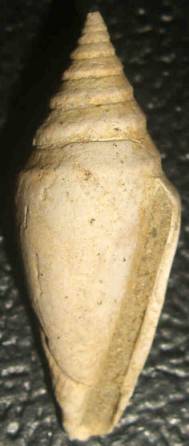
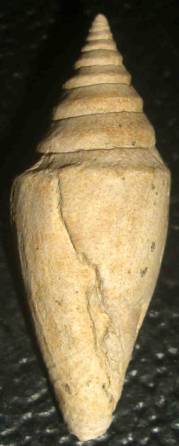
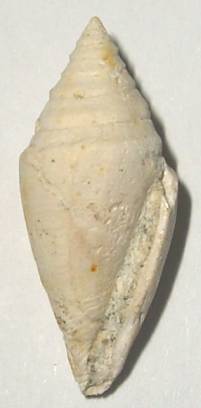
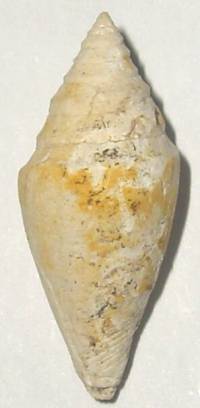
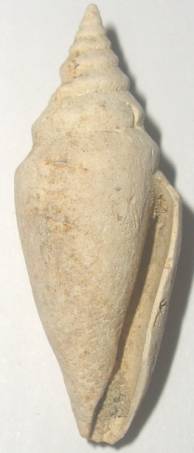
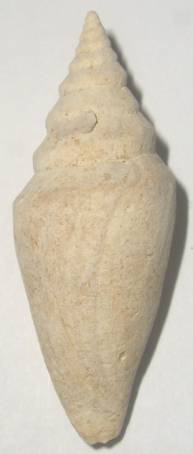
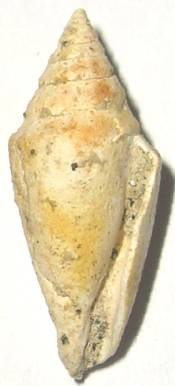
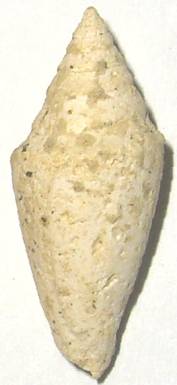
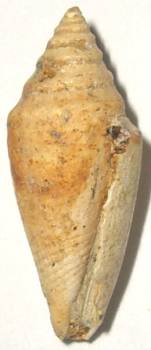
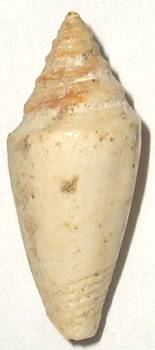
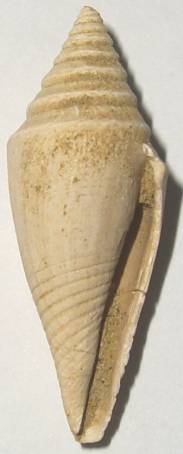
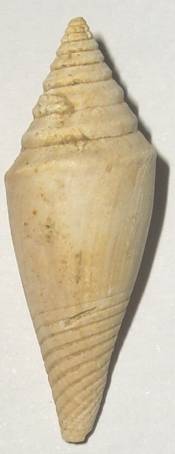
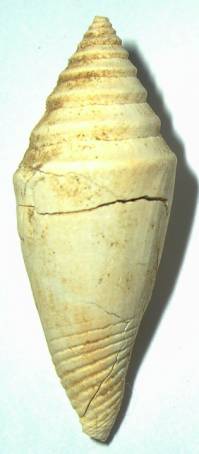
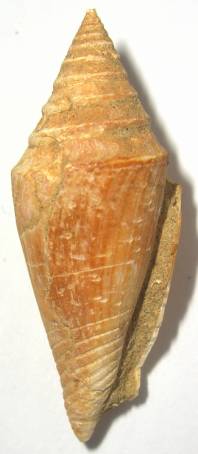
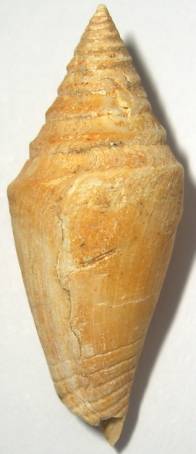
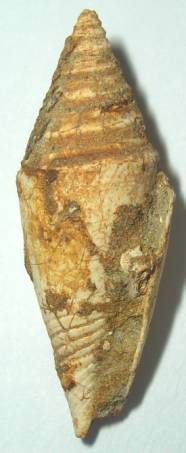
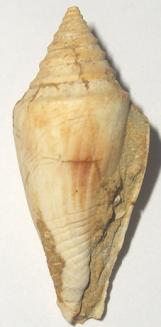
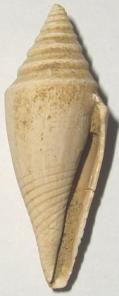
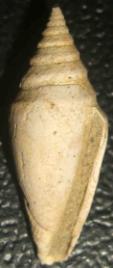
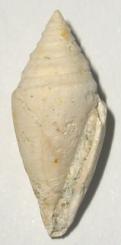
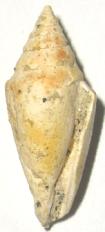
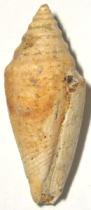
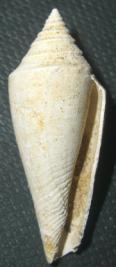
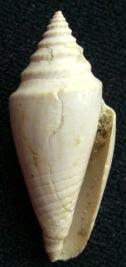
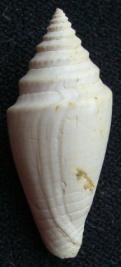
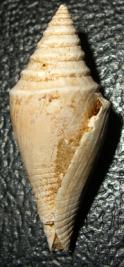
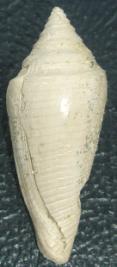
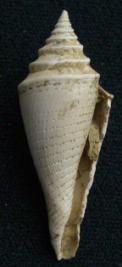
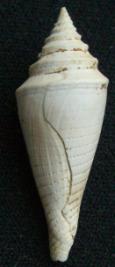
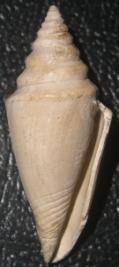
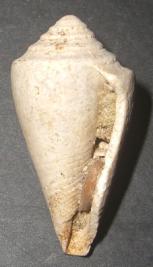
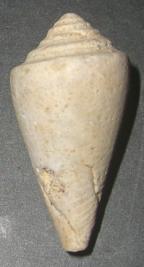
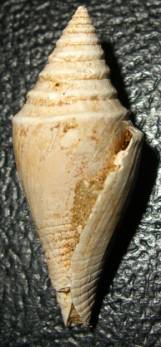
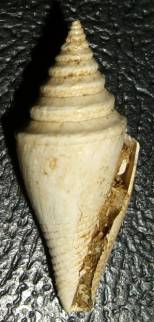
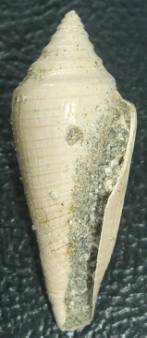
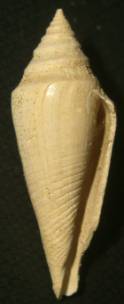
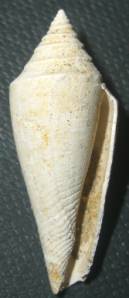
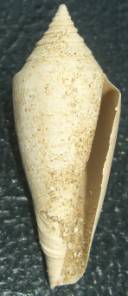
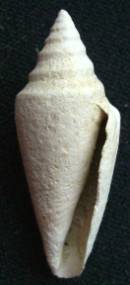
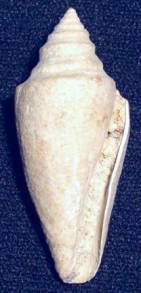
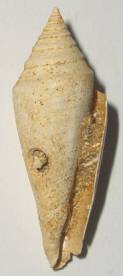
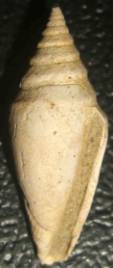
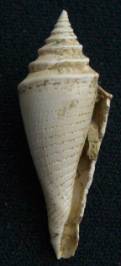
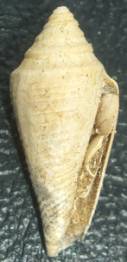
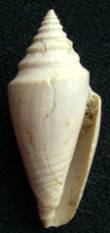
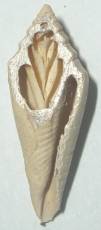
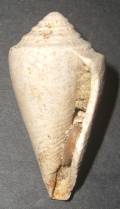
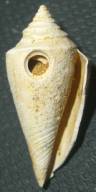
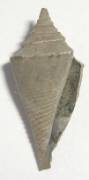
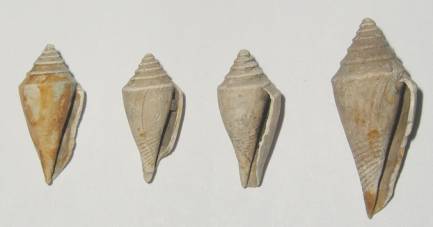
Conus (Conospirus) dujardini (Deshayes, 1845)
Conus dujardini egerensis (Noszky, 1936)
Conus dujardini predujardini (Peyrot, 1930)
Conus dujardini salomacensis (Peyrot, 1930)
Conus subacutangulus (Orbigny, 1852)
Conus torulosus (Millet, 1866) *
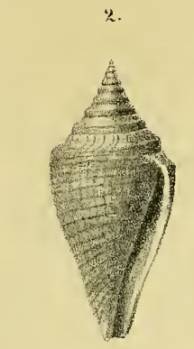
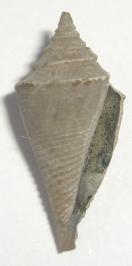
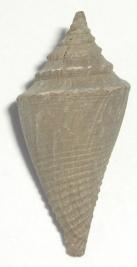
Conus (Conilithes) brezinae (Hornes & Auinger, 1879)
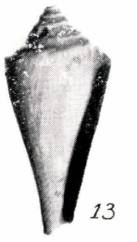
Descrizione e caratteristiche (13)
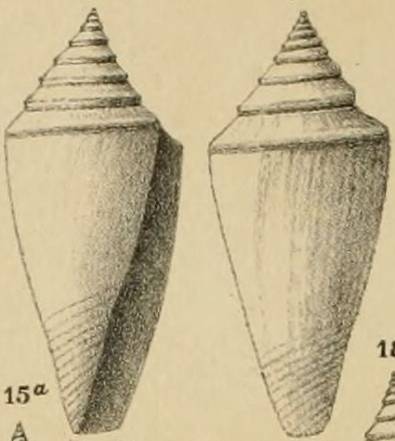
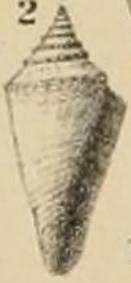
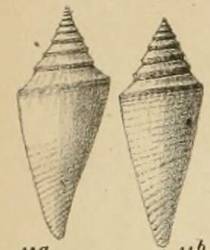
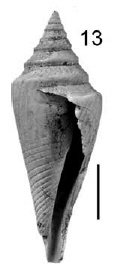
Habite... Fossile dans les faluns de la Touraine, de Dax, de Bordeaux, aux environs de Vienne, etc. Le nom de cette espèce fossile doit être changé, car Chemnitz l'avait appliqué à une espèce vivante, long-temps avant que l'espèce fossile tût connue. Nous consacrons à cette espèce, intéressante par sa distribution daus les terrains tertiaires moyens, le nom d'un naturaliste des plus distingués, auquel on doit un très bon travail sur la géologie de la Touraine et les fossiles que renferme son sol.
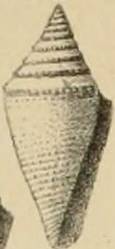
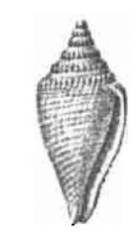
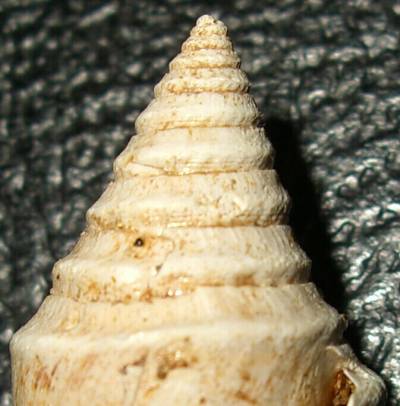
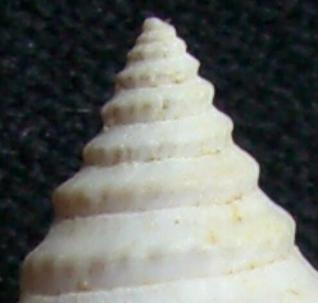
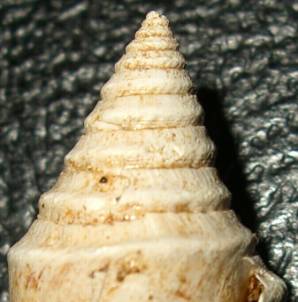
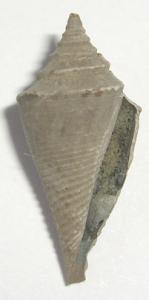
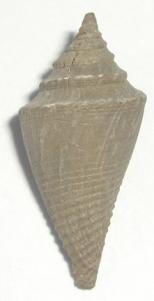
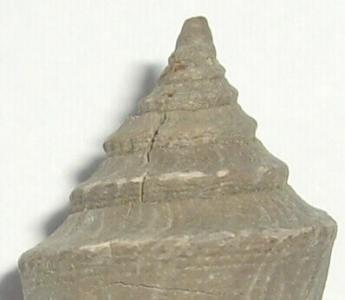
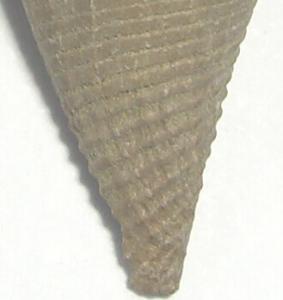
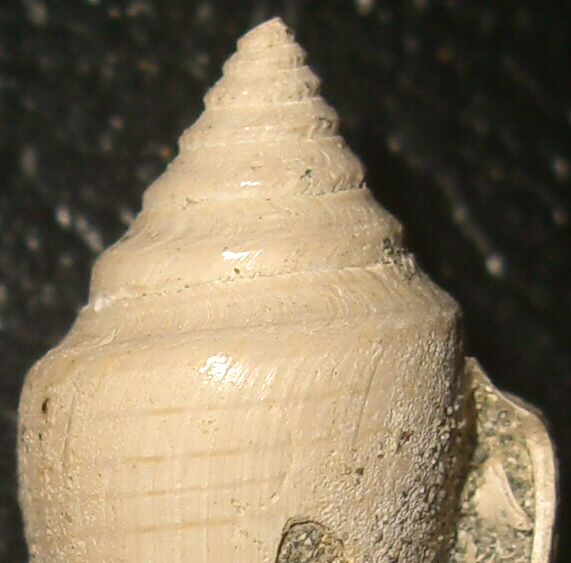
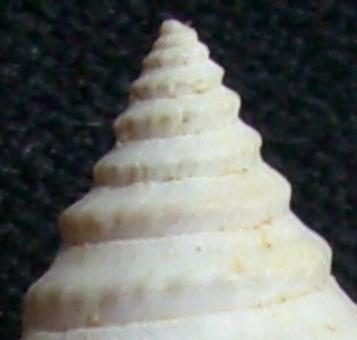
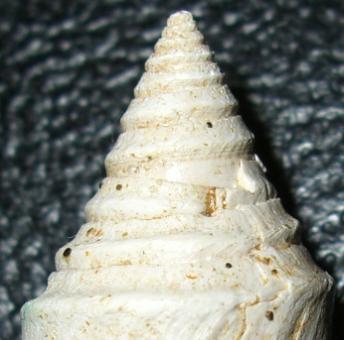
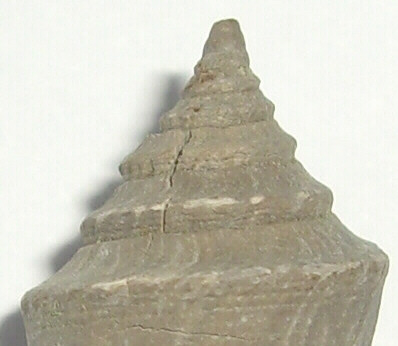
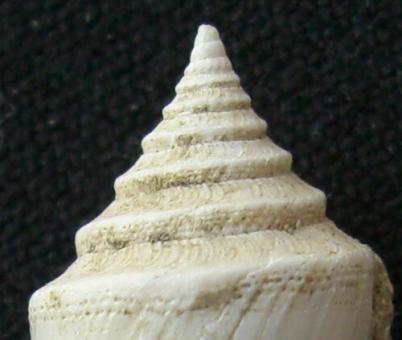
Ce Cone a beaucoup d'analogie avec le Canaliculatus de Brocchi; it acquiert la même taille et présente une forme semblable, seulement il est un peu moins atténué à la base, et les stries qui s'y montrent sont moins régulieres; la spire est regulierement conique, elle est plus ou moins allongée, selon les variétés individuelles, les tours sont plus courts, leur sun face à peine concave; dans la plupart ees premiers tours sont treillissés par de fines stries transverses et longitudinales, et presque toujours tis sont crénelés sur l'angle extérieur, il existe une variété des environs de Vienne en Autriche, dont tous les tours sont crénelés et les crénelures bornées par deux lignes de points enfoncés.
Cette coquilie existe en abondance dans presque tous les lieux où se rencontre le terrain tertiaire moyen. Les grands individus ont 33 millim, de long et 19 de large,
----------------------------------------------------------------
Dubois de Montpérreux, 1831
Dubois de Montperreux, nel 1831, pubblicò un documento relativo ai fossili di Polonia e Ucraina. E' importante non dimenticare che, ovviamente, si riferiva alle conoscenze del 1831 e che tante specie non erano ancora state descritte. Per quanto riguarda il Conus antidiluvianus (Bruguiere, 1792), elencò alcuni riferimenti bibliografici ed alcune località:
Rif. bibliografici:
· Bruguiere
· Brocchi, Tav. II fig. 11: Conus antidiluvianus
· Karsten
· Lamarck, T. VII P 529: mentioned the species Conus antidiluvianus Bruguière for the Paris Basin, only mentioning the Courtagnon locality and again referring to specimen(s?) in his private collection.
· Eichwald, pag. 222
UCRAINA
Jukowce in Wolhynie; Bilka
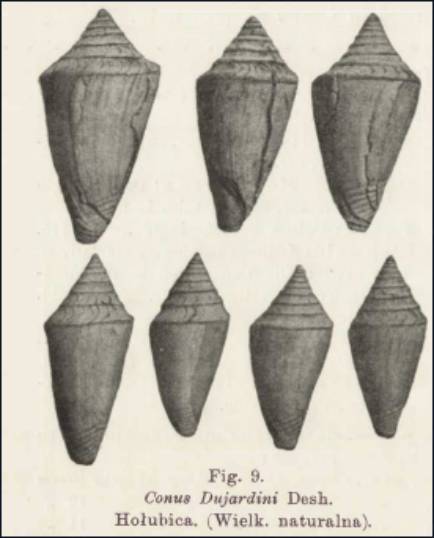
In Ukraine we have deposits belonging to the Oligocene, in which we can find specimens of Conus apparently similar to Conus antidiluvianus and thus identified until 1890, the year in which Koenen described Conus plicatilis. Also von Buch (1830, p. 133) listed Conus ‘antidiluvianius’ on the basis of material collected by ‘Friedrich Dubois von Locle’ (= Frédéric Dubois de Montpéreux) from Bialazurka (Ukraine). No illustrations were given for these records. Such Miocene Central Paratethys records were later considered to belong to Conus dujardini Deshayes, 1845, e.g. by Eichwald (1853, p. 207) and Friedberg (1911, p. 47, fig. 9).
Eichwald https://www.biodiversitylibrary.org/bibliography/52391 https://www.biodiversitylibrary.org/item/112200#page/233/mode/1up
Friedberg https://rcin.org.pl/publication/4792
POLONIA
Szuskowce (Shukowze), vicino a Bialozurka
Eichwald (1830, p. 222) just mentioned ‘Conus antediluvianus Brug.’ (emending spelling) from the Shukowze (Poland) locality.
ITALIA
Siena; Monterigioni vicino a Stagia; San Miniato; Parlascio; Sogliano vicino a Cesena; Bologna
In the Italian localities listed, we have Pliocene deposits in which specimens of Conus antidiluvianus, a typically Pliocene species, are found: these specimens are recognized as truly identifiable as Conus antidiluvianus.
FRANCIA
Courtagnon
Per quanto riguarda la Francia, Lamarck si riferì genericamente ad esemplari della sua collezione provenienti da Courtagnon indicandoli come Conus antidiluvianus, e così doveva essere, dato che solo nel 1865 Deshayes descrisse il Conus parisiensis, appartenente all'Eocene.
Localité. Fossile dans les sables infra-olithiques de Szuskowce près de Bialozurka (Ukraina), à Bilka (Ukraina), à Jukowce en Wolhynie (Ukraina); dans les Crètes Sanesi, à Monterigioni près de Stagia (Italia), à San Miniato (Italia), à Parlascio, aux alentours de Sogliano près Cesena, dans les collines Bolognèses et du Plaisantin en Italie (Broc.); à Courtagnon en Champagne (France) (Lam.) (14).
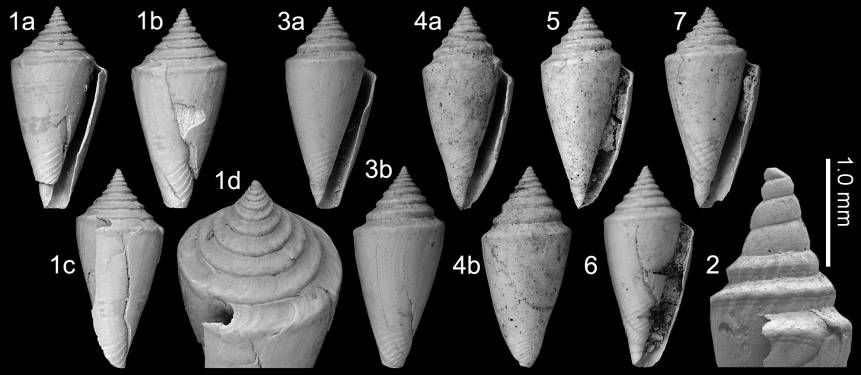
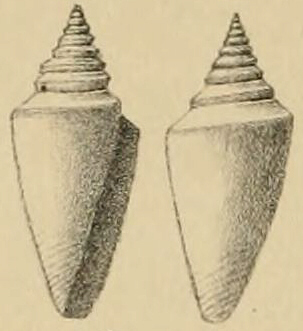
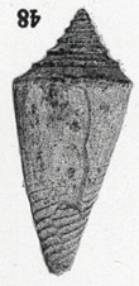
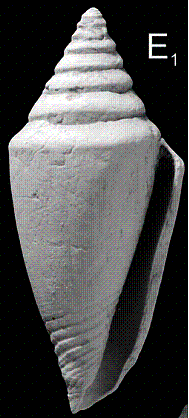
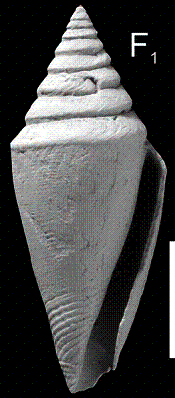
Conus dujardini was introduced by Deshayes (1845) without clearly stating type material or type area because he referred to material from Ukraine, Austria and France. From the context, it is obvious, that he had French specimens at hand. In anycase he referred to the illustration of Dubois de Montpérreux (1831, pl. 1, fig. 1), which was later designated the lectotype of Conus dujardini by Glibert (1952). Dubois lists some locations, but does not specify the provenance of the specimen drawn.
|
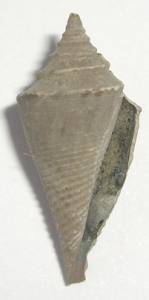
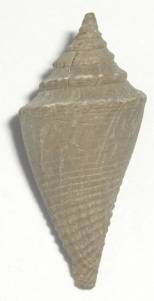
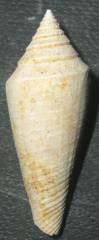
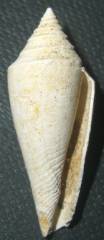
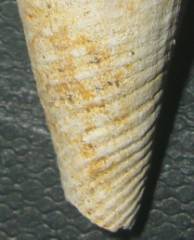
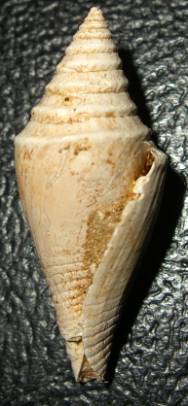
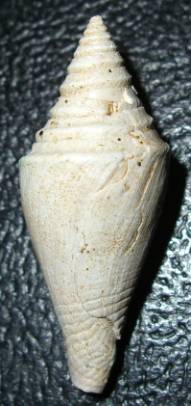
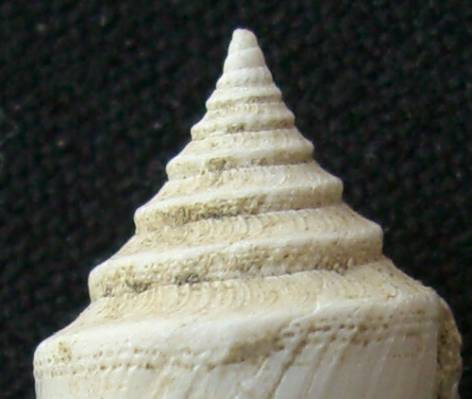
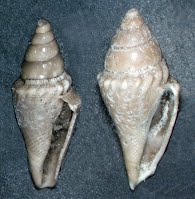
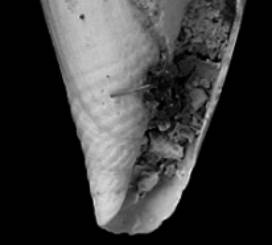
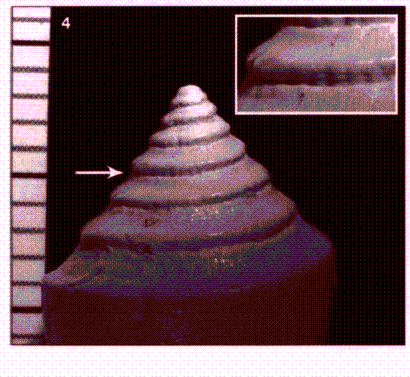
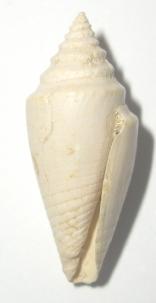
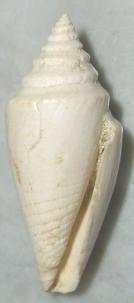
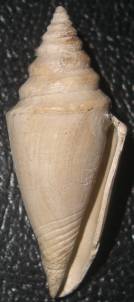
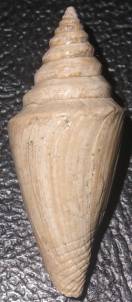
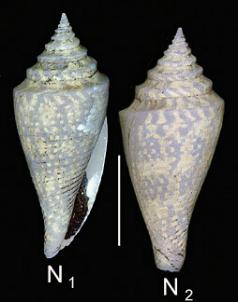
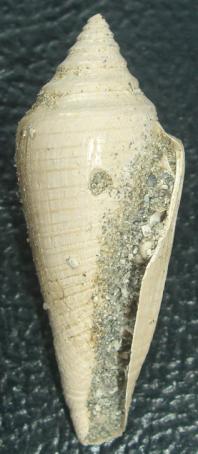
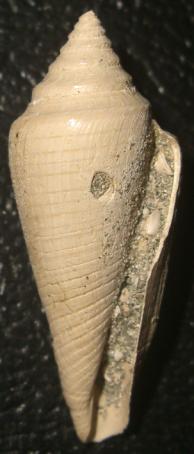
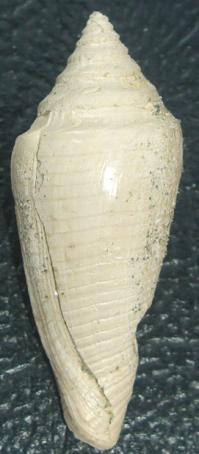
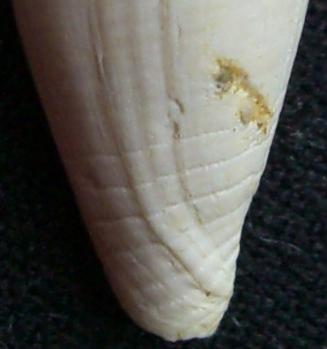
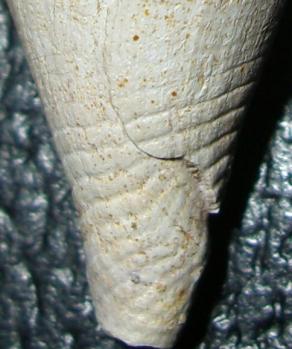
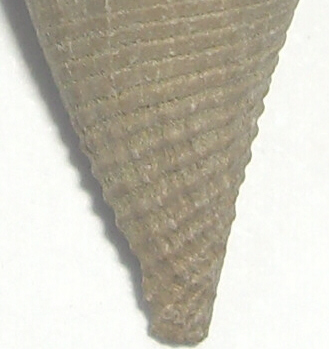
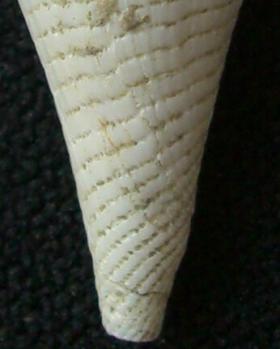
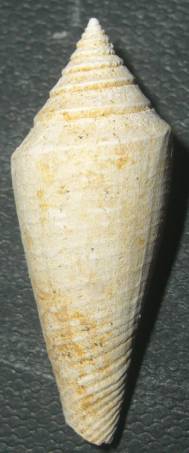
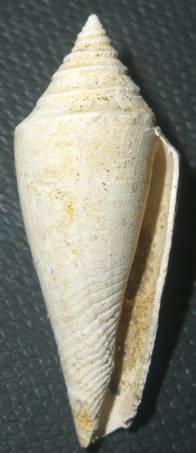
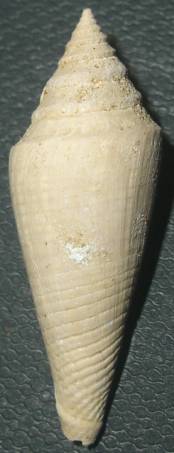
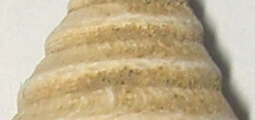
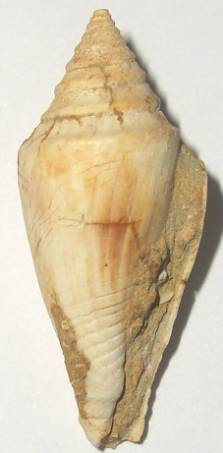
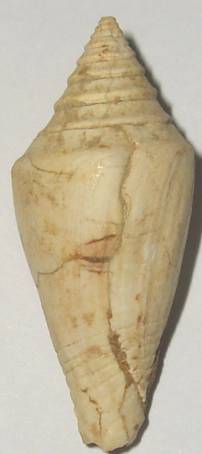
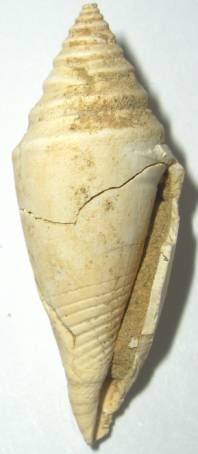
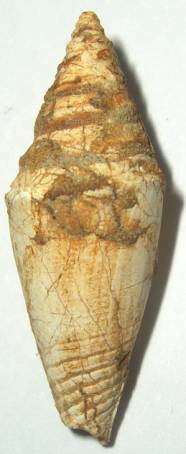
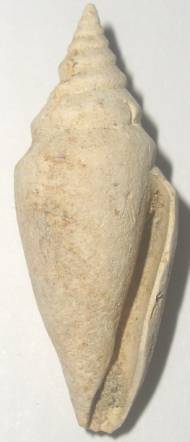
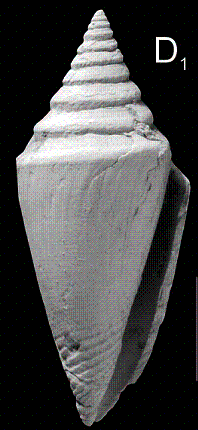
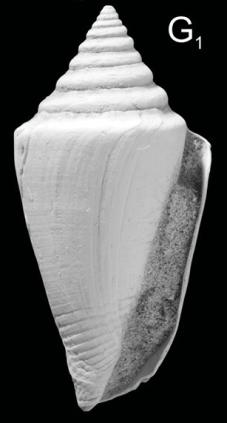
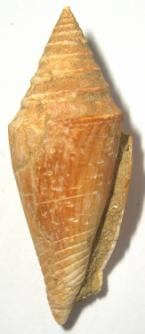
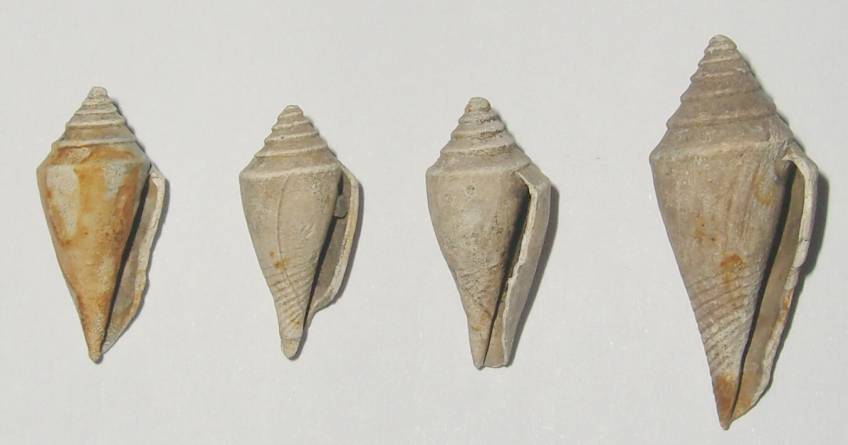
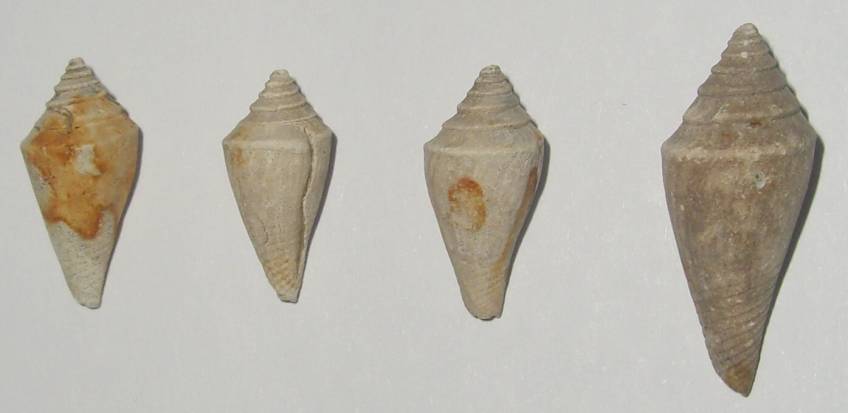
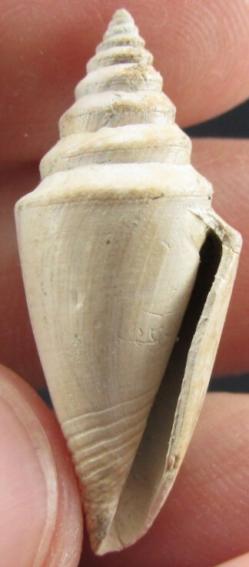
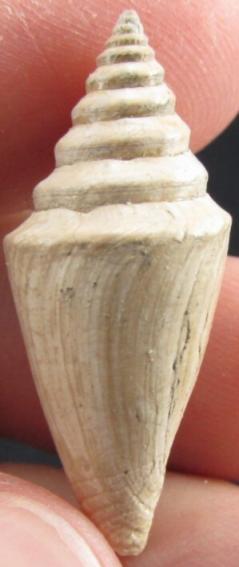
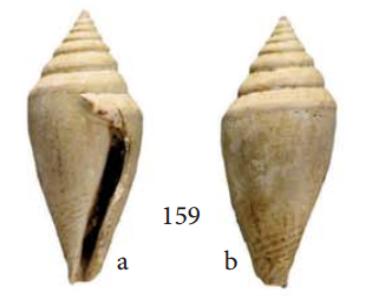
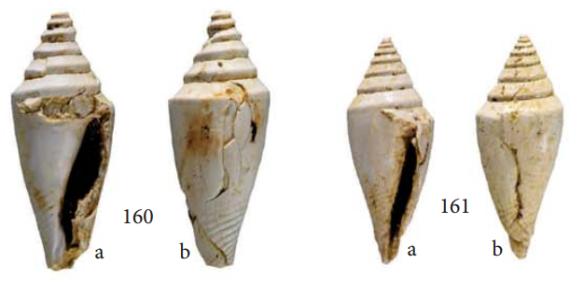
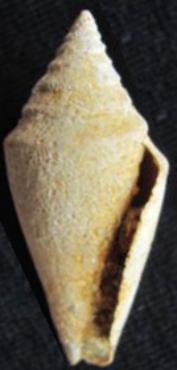
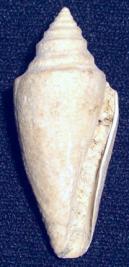
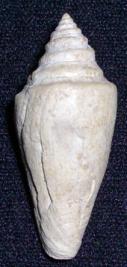
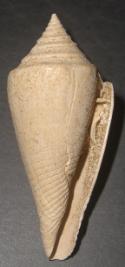
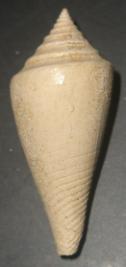
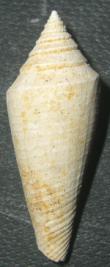
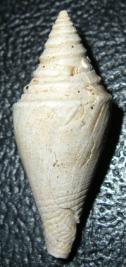
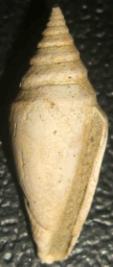
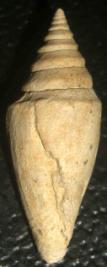
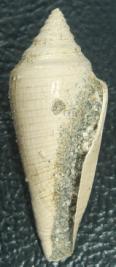
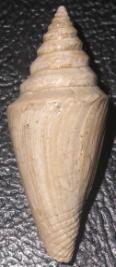
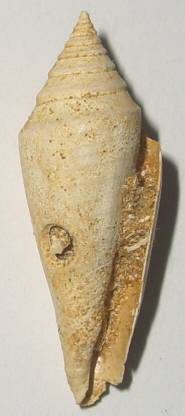
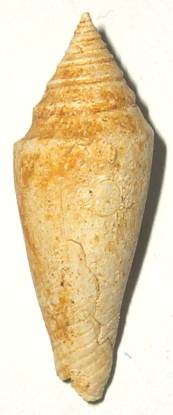
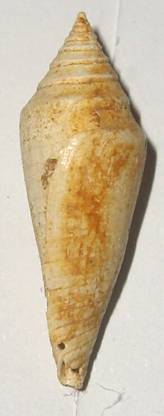
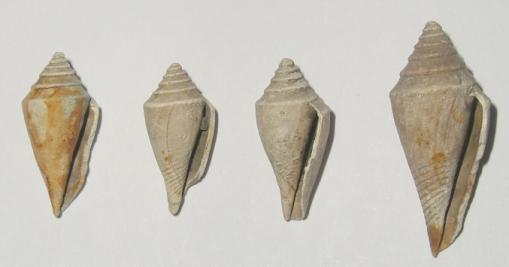
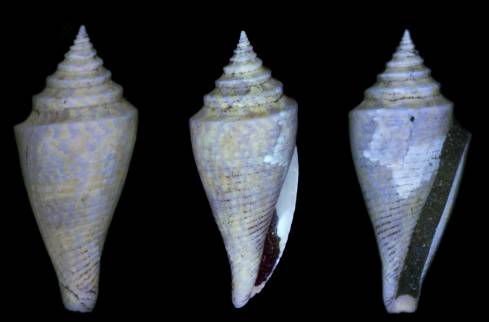
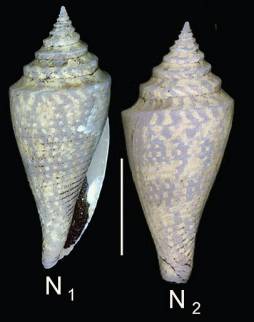
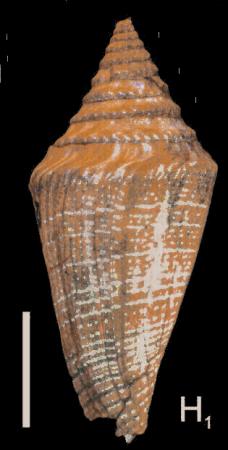
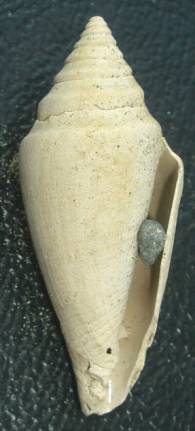
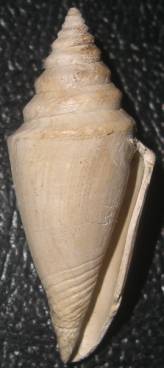
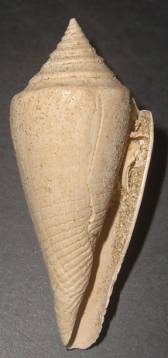
E’ una conchiglia biconica, di forma variamente allungata, scalariforme. Nei primi giri sono spesso presenti dei tubercoli che possono estendersi anche in tutti i giri. Negli ultimi giri è evidente una certa concavità. Alla base sono presenti striature. Possono essere presenti, in alcune varietà, delle strie nella parte inferiore di ogni spira, come è possibile notare nel C. dujardini salomacensis. L’altezza della spira può essere più o meno elevata. Il Conus dujardini è caratterizzato da forme differenti. Mentre per Kovács1 & Z. Vicián il Conus exaltatus non è riconosciuto come specie valida (3) , per Harzhauser, Mathias & Landau il nome Conus dujardini dovrebbe essere sostituido dal nome Conus exaltatus. Alcuni esemplari sono caratterizzata dalla parte superiore dell’ultimo giro liscia, mentre altri, identici nella morfologia, hanno l’ultimo giro completamente ricoperto da linee spirali incise. Nel Miocene si rinvengono anche conchiglie con granulate. Il Conus antidiluvianus e il Conus canaliculatus potrebbero essere discendenti del Conus dujardini (3), mentre per De Gregorio il C. dujardini e il Conus canaliculatus sono variazioni di un’unica specie.
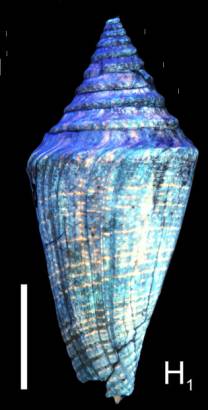
La colorazione potrebbe essere stata costituita da linee trasversali regolari di colore ocra (v. AZFC 257-07).
Secondo Sacco, la forma del Conus dujardini costituisce un gruppo all’interno del quale si possono rinvenire svariate forme, caratteristiche quasi esclusivamente del Miocene. Il Conus dujardini sembra aver abitato fondi melmosi, e per questo motivo non è frequente in Piemonte, in cui sono presente principalmente depositi sabbiosi(1).
Conus torulosus (Millet, 1866)
Descrizione originale del Conus torulosus: Coq.de moyenne taille, à spire élevée, conique, composée de 11-12 tours creusés en gouttière et bordés chacun d’un cordonnet arrondi; le dernier tour présente à sa base, 7-8 petits sillons placés obliquement. Longueur: 25-26 millimètres; diamèter: 13-14 millimètres, Th, Sc.’ (Millet, 1865, p. 586).
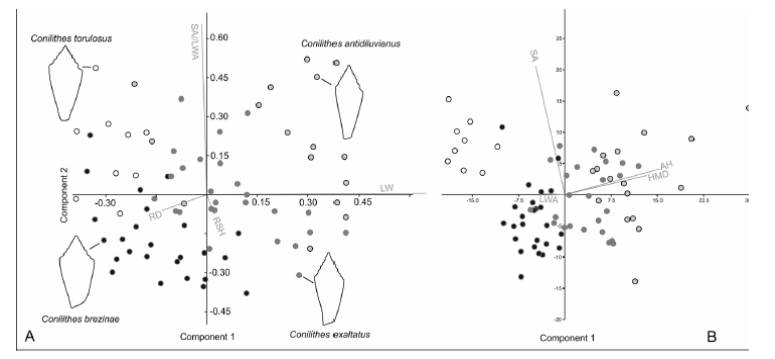
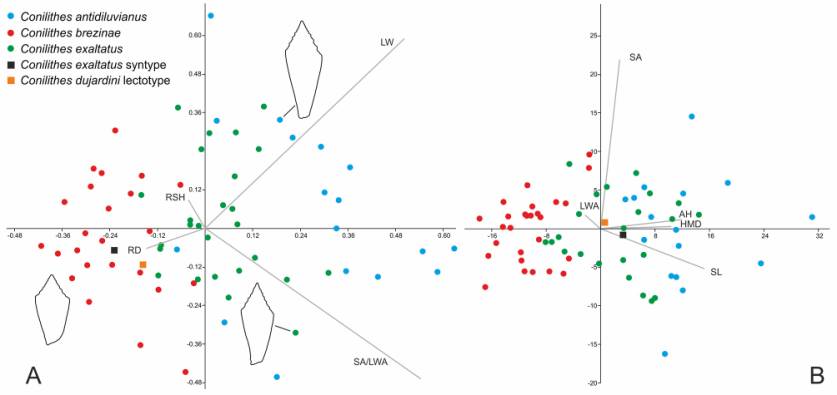
Figure 1. Principal components analysis (PCA) based on shell measurements of specimens of four Conilithes species (NHMW collection + Table 1). A: shell ratios, B: shell measurements. A separation of C. torulosus, C. antidiluvianus, C. exaltatus and C.brezinae is evident in both analyses. For measurement abbreviations see legend Table X (adapted from Harzhauser & Landau, 2016, fig. 7). |
|
|
Le località indicate per il Conus torulosus, indicato anche come sinonimo del Conus dujardini, sono Genneteil, la Beurelière e Breil-de-Foin
A – B. PCA based on shell measurements of specimens of 3 Conilithes species (NHMW collection, Table 1). A: shell ratios, B: shell measurements. A separation of C. antidiluvianus, C. exaltatus and C. brezinae is evident in both analyses. The measurements for the lectotype of C. dujardini and the syntype of C. exaltatus were taken from the illustrations in Eichwald (1952) and Dubois de Montpéreux (1831). SL = shell length, AH = apertural height, HMD: height of maximum diameter, SA = spire angle, LWA = angle of the last whorl, LW = length width ratio, RD = relative diameter, RSH = relative height of spire. (4)
|
VARIETA’ in ordine alfabetico |
|||||||||||||
|
|
||||||||||||
|
|||||||||||||
|
|
||||||||||||
|
|
||||||||||||
Propongo questa var. per alquanti ben conservati esemplari (Lungh. 17 millm., largh. 8, altezz. della spira 7), sulla superficie dell’ultimo anfratto dei quali scorgonsi circa 22 fini e leggeri funicoletti, i quali vanno facendosi più rialzati e grossi verso la base; e poichè la forma e disposizione della spira di questi esemplari corrisponde esattamente al C. Dujardini, cosi ho pensato di far anche rientrare fra gli svariati modi d'essere di questa sp. la peculiare scultura dei medesimi.
|
|
||||||||||||
|
|||||||||||||
|
|
||||||||||||
|
|
||||||||||||
|
|
||||||||||||
|
|||||||||||||
|
|
||||||||||||
|
|
||||||||||||
|
|||||||||||||
|
|||||||||||||
|
|||||||||||||
|
|||||||||||||
|
|||||||||||||
|
|
|||||||||||||
Distribuzione:
Questa specie è specialmente caratteristica del Miocene, anche se alcune varietà si rinvengono anche nel Pliocene inferiore (1)(2).
In Austria si rinviene il Conus brezinae nel Badeniano.
In Belgio nel Miocene
In Bulgaria è presente il Conus exaltatus nel Badeniano.
In Danimarca nel Tortoniano
In Francia è presente nell’Aquitaniano (Miocene inferiore)
In Germania
In
Italia è
rinvenuto in Piemonte nel Tortoniano e soprattutto nell’Elveziano
(Miocene) nonché nell’Astiano (Pliocene)
In Olanda
è stato trovato un Conus
dujardini var. pseudoantidiluviana
nell’Hemmoriano.
In Polonia
In Portogallo
Nella Repubblica Ceca
In Romania
In Slovakia è presente il Conus dujardini nel Badeniano.
In Ucraina è presente il Conus dujardini nel Badeniano.
In Ungheria ci sono il Conus dujardini e il Conus brezinae nel Badeniano
In Turchia è segnalato nel Serravaliano
In Algeria è segnalato nel Tortoniano
|
Austria |
Bulgaria |
Francia |
Italia |
Olanda |
Slovakia |
Ucraina |
Astiano |
|
|
|
C.dujardini |
|
|
|
Tortoniano |
|
|
|
C.dujardini |
|
|
|
Elveziano |
|
|
|
C.dujardini |
|
|
|
Badeniano |
C.brezinae |
C.exaltatus |
|
|
|
C.dujardini |
C.dujardini |
Aquitaniano |
|
|
C.dujardini |
|
|
|
|
|
|
|
|
|
|
|
|
|
|
|
|
|
|
|
|
|
|
|
|
|
|
|
|
|
|
|
|
|
|
|
|
|||
|
|||
|
|
||
|
|||
|
|
|
||
|
|
||
|
|
|
|
|
|
|
|
|
|
|
|
|
|
|
Conus (Conilithes) brezinae (Hoernes & Auinger, 1879)
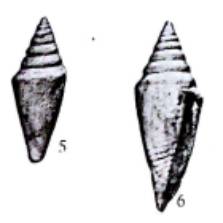
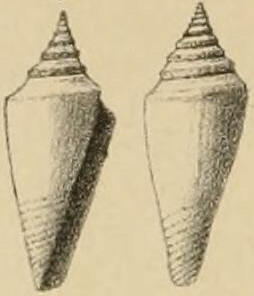
The fourth variety, which M. Hoernes (loc. cit.) describes from Conus Dujardini, must, after closer examination, be distinguished from this form as independent. M. Hoernes says of it:"Finally, the fourth variety (Fig. 8)(16) is the most common; the thread in this variety is more tower-shaped, and the stepped form is not as pronounced as in the first variety, so that in older specimens the thread becomes almost flat in profile. Furthermore, the central edge of the individual turns is not as sharp as in the first variety; rather, it is a thin ridge that extends along the turns. Otherwise, this form is identical to the others."We have added the following remarks to this description regarding the sculpture of the form in question, which we now consider independent; these remarks also constitute the truly distinguishing characteristics of Conus brezinae. In well-preserved specimens, especially smaller ones, one notices that its sculpture consists of numerous fine, but strongly raised, thread-like transverse lines that can be traced across the entire bowl, but are often not noticeable in old and poorly preserved specimens. However, even in these, the condition of the base almost always serves as an easy and reliable distinguishing feature. In Conus brezinae, several oblique, strongly raised, wrinkled transverse striations are found here, separated by broader, shallow furrows. In Conus Dujardini, on the other hand, there are depressed transverse lines, and in reasonably good preservation, incised dots can also be perceived in them. Of course, it must be admitted that just as with regard to the general shape, there are also cases with regard to sculpture in which the distinction between Conus brezinae and Conus dujardini becomes difficult, even impossible. With regard to the general shape, there are forms that occupy a middle ground between Conus dujardini and Conus brezinae. These cases, which M. Hoernes cited as a second variety of Conus dujardini, prove upon closer examination of the sculptural differences to be, on the one hand, aberrant cases of Conus dujardini, and on the other hand, those of Conus brezinae. True transitions are not perceptible, however similar the two forms may be. However, with poorly preserved cases, even the most careful examination leaves us in doubt as to whether we are dealing with one form or the other. This applies especially to those specimens of Conus brezinae on which the raised lines have disappeared due to rolling However, this uncertainty cannot prevent us from distinguishing the two forms as Conus dujardini and brezinae, since well-preserved cases can be reliably differentiated (17).
Typical specimens of Conus brezinae are available to us not only from the locations already listed by M. Hoernes: Gainfahrn, Enzesfeld, Steinabrunn and Nicolsburg, where our species is found in large numbers, but also from the following locations: Grinzing, Pötzleinsdorf, Vöslau, Grund, Niederleis, Raussnitz, Jerutek near Lissitz, Grussbach, Bischofswart, Porstendorf, Rudelsdorf, Porzteich, Drnowitz, Poels near Wildon, Tarnopol, Ritzing, Lapugy, Szobb near Gran, Hidas (17).
|
|
||
|
|
|
|
|
|
|
|
|
|
|
|
|
|
Austria
|
|
|
|
|
|
|
UNGHERIA
|
|
|
|
|
|
CRETA
|
||
|
|
|
|
|
|
|
|
||
|
|
|
|
|
|
|
|
|
|
|
|
|
|
|
|
|
|
|
|
||
|
|
|
|
|
|
Germania |
Polonia (6) |
|
Slovacchia
|
|
Slovenia
|
|
Ucraina
|
|
Ungheria (9) |
|
Esemplari della mia collezione |
||
|
|
|
|
|
|
|
|
|
|
|
||
|
|
|
|
|
||
|
|
|
|
||
|
|
|
|
|
|
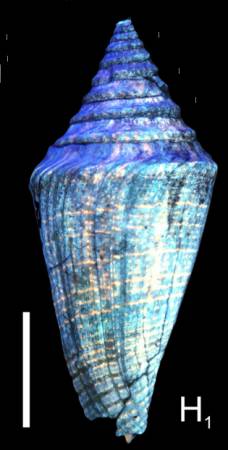
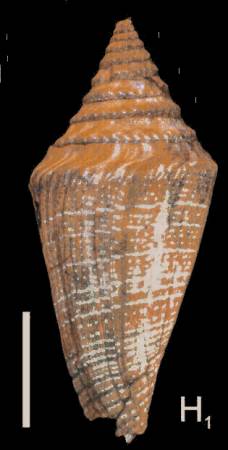
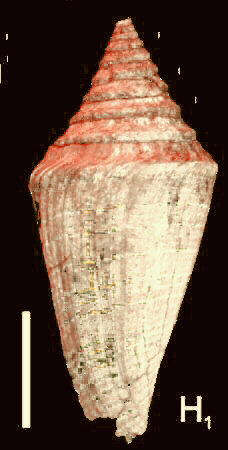
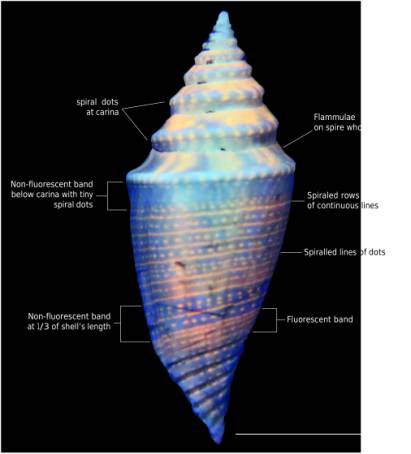
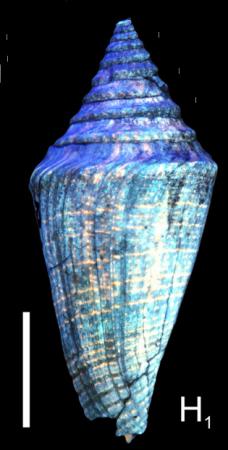
Esempi di colorazione in luce UV |
|
|
Conus dujardini
|
||||
|
|
|
|
|
|
|
||||
|
|
|
|
|
|
|
|
|
|
|
|
|
|
|
|
|
||||
|
|
|||
|
|
|
||
|
|
|
||
Conus dujardini salomacensis
Les spécimens de l'Helvétien supérieur de Salles (Largileyre, M'" Débat) ont la spire encore plus élevée que ceux du Tortonien; leur dernier tour est relativement plus court, moins effilé, ils font la transition avec G. Bronnii Mich. On pourrait les distinguer comme var. salomacensis (Peyrot, 1930) |
||||
|
|
|
|
||
|
|
|
|
|
Bibliografia
Consultata
(2) - Carlo Chirli (1997) “Malacofauna pliocenica toscana - vol. I - Superfamiglia Conoidea”, Firenze
(11) - Bernard M. Landau, Frank Van Dingenen & Luc Ceulemans “The upper Miocene gastropods of northwestern France, 5. Conoidea”
(13) - Deshayes, G. P., 1845. Histoire Naturelle des Animaux sans Vertèbres., 2nd ed. (11 )
(16) - Hoernes, R., 1856. Hoernes, R., 1856. Abhandlungen der Kaiserlich-Koniglichen Geologischen Reichsanstalt, 3